Open any Web3 project’s marketing playbook and you’ll find the same five channels: paid ads, KOL campaigns, press releases, partnership announcements, and email blasts. Each channel targets audiences with the same message. The same headline. The same offer. The same call to action. Delivered to everyone, regardless of who they are, what they’ve done on-chain, or what they’re actually looking for.
This is mass marketing. And in Web3 — where your users are pseudonymous blockchain addresses rather than named profiles — it is the only approach most projects know how to use. The problem is that it doesn’t work. Not because the channels are wrong, but because your users are not the same. A DeFi veteran who has managed leveraged positions across five protocols for three years needs a completely different conversation from a newcomer who connected their first wallet six months ago. Sending them both the same message guarantees you speak clearly to neither.
This is where Web3 Personas change everything. ChainAware calculates a behavioral persona for every wallet that interacts with your Dapp — derived from their actual on-chain history, not guessed demographics or cookie-based assumptions. With a Web3 Persona in hand, your platform can have a genuinely personalized conversation with each user: automatically, in real time, at scale.
Why Mass Marketing Fails in Web3
The five pillars of Web3 mass marketing — ads, KOLs, press, partnerships, and email — share a single, critical limitation: they treat every recipient as interchangeable.
Paid advertising targets users by inferred interest categories, device types, or browsing behavior — none of which tells you whether the person clicking is a ten-year crypto veteran or someone who bought their first ETH last week. KOL campaigns broadcast to everyone in a KOL’s audience, which might be 200,000 followers with wildly different experience levels, risk tolerances, and protocol interests. Press releases reach journalists and readers indiscriminately. Partnership announcements go to everyone subscribed to both projects’ channels.
The result is the same message reaching radically different people. And a message calibrated for one type of user is almost certainly wrong for all the others. The DeFi veteran finds your beginner-focused messaging condescending and leaves. The newcomer finds your expert-level product description overwhelming and leaves. You’ve spent your budget to move neither.
This is why McKinsey’s research on personalization ROI finds that companies using personalization at scale generate 40% more revenue than those using generic approaches. The principle applies in Web3 as strongly as anywhere — more so, because blockchain data makes behavioral personalization dramatically more precise than anything available in traditional digital marketing.
And as we explored in our analysis of why influencer marketing isn’t working in Web3, the KOL channel specifically fails both at generating qualified traffic and at converting any traffic it does generate — for exactly this reason: attention is not personalization, and personalization is what converts.
Stop Guessing Who Your Users Are
Web3 Behavioral Analytics: See the Real Personas Behind Your Wallets
Experience levels, risk profiles, predicted intentions, Wallet Ranks — aggregated across all wallets connecting to your Dapp. Free. No code. Understand your actual user mix before you craft a single message.
The “One Size Fits All” Problem on Your Dapp
The mass marketing problem doesn’t end when users arrive at your Dapp. Most platforms compound it by greeting every wallet with identical messaging, identical product recommendations, and identical calls to action — regardless of who that wallet is.
Consider what happens when three very different users land on the same DeFi lending protocol’s homepage in the same hour:
User A is a three-year DeFi veteran with a Wallet Rank in the top 10%, a history of leveraged positions across multiple protocols, and current behavioral patterns suggesting active interest in yield optimization. They want to know about your highest-APY strategies, your collateral options, and your liquidation mechanics. The beginner-focused headline they see doesn’t speak to them at all.
User B is a moderately experienced user who’s been in DeFi for 18 months, primarily as a conservative liquidity provider. They want to understand your risk parameters and whether your rates are competitive with what they’re currently earning. The aggressive yield farming CTA they see is actually a turn-off — it signals the wrong risk profile for them.
User C is a newcomer who just moved funds from a centralized exchange for the first time. They don’t know what collateral ratio means. They’re looking for reassurance, a simple entry point, and guidance on what to do first. The expert-level product description they see is incomprehensible and intimidating.
All three see the same page. The page converts none of them effectively. Web3 Personas solve this by identifying User A, User B, and User C the moment their wallet connects — and delivering a different message to each, automatically, before they’ve taken any action on your platform.
According to Salesforce’s State of the Connected Customer research, 73% of customers expect personalized experiences, and 62% say they lose trust in brands that deliver generic ones. In Web3, where competition is a wallet connection away and switching costs are near zero, failing to personalize is failing to retain.
What Are Web3 Personas?
A Web3 Persona is a behavioral profile of a wallet address, calculated from its complete on-chain history. It answers the question that mass marketing cannot: who is this specific user, and what are they most likely to need?
Traditional marketing personas are constructed from surveys, focus groups, and demographic data — methods that are approximate at best and frequently wrong. Web3 Personas are constructed from facts: every transaction an address has ever made, every protocol it has ever interacted with, every counterparty it has ever transacted with, and every behavioral pattern that emerges from this complete history.
This is possible in Web3 because blockchain data is public and immutable. There is no equivalent of this in traditional marketing — no system that can tell you, before a user fills in a single form, exactly how sophisticated they are, what they’re likely to do next, and what message will resonate most with their demonstrated behavior. ChainAware’s Predictive Data Layer — covering 14M+ wallets across 8 blockchains — makes this intelligence available instantly, the moment a wallet connects to your Dapp.
The Five Dimensions of a Web3 Persona
Every Web3 Persona calculated by ChainAware encompasses five behavioral dimensions, each derived from on-chain data:
Experience Level. How long has this wallet been active? How many protocols has it interacted with? How complex and diverse are its transactions? Experience is scored on a continuous scale and grouped into practical segments: Veteran (deep multi-protocol history over multiple years), Intermediate (regular DeFi engagement, moderate protocol diversity), and Newcomer (limited history, simple transactions, recent first interactions). The experience segment determines how sophisticated your messaging and product presentation should be.
Risk Willingness. Based on the wallet’s historical protocol choices — the ratio of conservative to aggressive DeFi strategies, the degree of leverage used, the type of assets held — what is this wallet’s demonstrated risk tolerance? Risk Willingness ranges from Conservative (primarily stablecoin strategies, low-risk protocols) through Moderate to Aggressive (leveraged positions, high-volatility assets, experimental protocols). Matching your product offer to the user’s actual risk profile dramatically increases relevance and conversion probability.
Predicted Intentions. Based on behavioral patterns — what protocols the wallet has used recently, how it has moved funds, what its historical interaction cadence suggests — what is this wallet most likely to do next? Intentions include probability scores for trading, staking, borrowing, providing liquidity, bridging, and other on-chain actions. A wallet with high predicted staking intention shown a staking product offer at the right moment converts at dramatically higher rates than a random visitor shown a random product. For a deep dive, see our Prediction MCP guide.
Wallet Rank. A composite quality score that consolidates experience, activity, protocol diversity, and behavioral depth into a single comparative metric. Wallet Rank tells you where this wallet sits in the overall quality distribution of Web3 participants — from the top 1% of highly active, sophisticated users to the bottom percentiles of inactive or newly-created wallets. Full methodology in the Wallet Rank complete guide.
Trust Score. The fraud risk assessment: how trustworthy is this wallet as a counterparty? The Trust Score (1 minus Fraud Score) indicates whether a connecting wallet shows behavioral patterns consistent with legitimate use or with fraud preparation. High-Trust wallets are your genuine users; low-Trust wallets warrant closer monitoring. Detailed explanation in our guide to Crypto Trust Score metrics.
See Every Wallet’s Full Persona
Wallet Auditor: Experience, Risk, Intentions, Wallet Rank, AML — Free
The Wallet Auditor displays the complete Web3 Persona for any wallet address. Use it to manually verify users, audit your own wallet’s profile, vet partners and KOLs, or explore the persona dimensions before building automated personalization.
How ChainAware Calculates Web3 Personas
ChainAware’s Predictive Data Layer pre-calculates Web3 Personas for 14M+ wallet addresses across 8 blockchains: Ethereum, BNB Chain, Base, Polygon, Solana, TON, Tron, and Haqq. The calculation combines multiple ML models trained on confirmed behavioral datasets — each optimized for one of the five persona dimensions.
The experience and Wallet Rank models analyze transaction history depth, protocol interaction diversity, wallet age, and activity patterns to place each wallet on continuous behavioral scales. The risk willingness model analyzes the types of protocols a wallet has historically used — weighting leverage usage, asset volatility, and protocol risk tier. The intentions model uses sequence analysis of recent behavioral patterns to predict the probability distribution of next actions. The Trust Score model applies fraud detection AI trained on confirmed fraud and legitimate address datasets.
All five dimensions are pre-calculated and cached — meaning when a wallet connects to your Dapp, the full persona is returned in milliseconds. There is no analysis delay between wallet connection and personalized message delivery. The full technical integration details are covered in the Web3 Behavioral Analytics guide.
According to Harvard Business Review research on effective personalization, the most effective personalization is based on behavioral data rather than demographic or interest-based proxies — because behavior directly reveals intent, while demographics only approximate it. On-chain behavioral data is the most precise behavioral record available to marketers anywhere.
Delivery Mode 1: Growth Agents (Automated, No-Code)
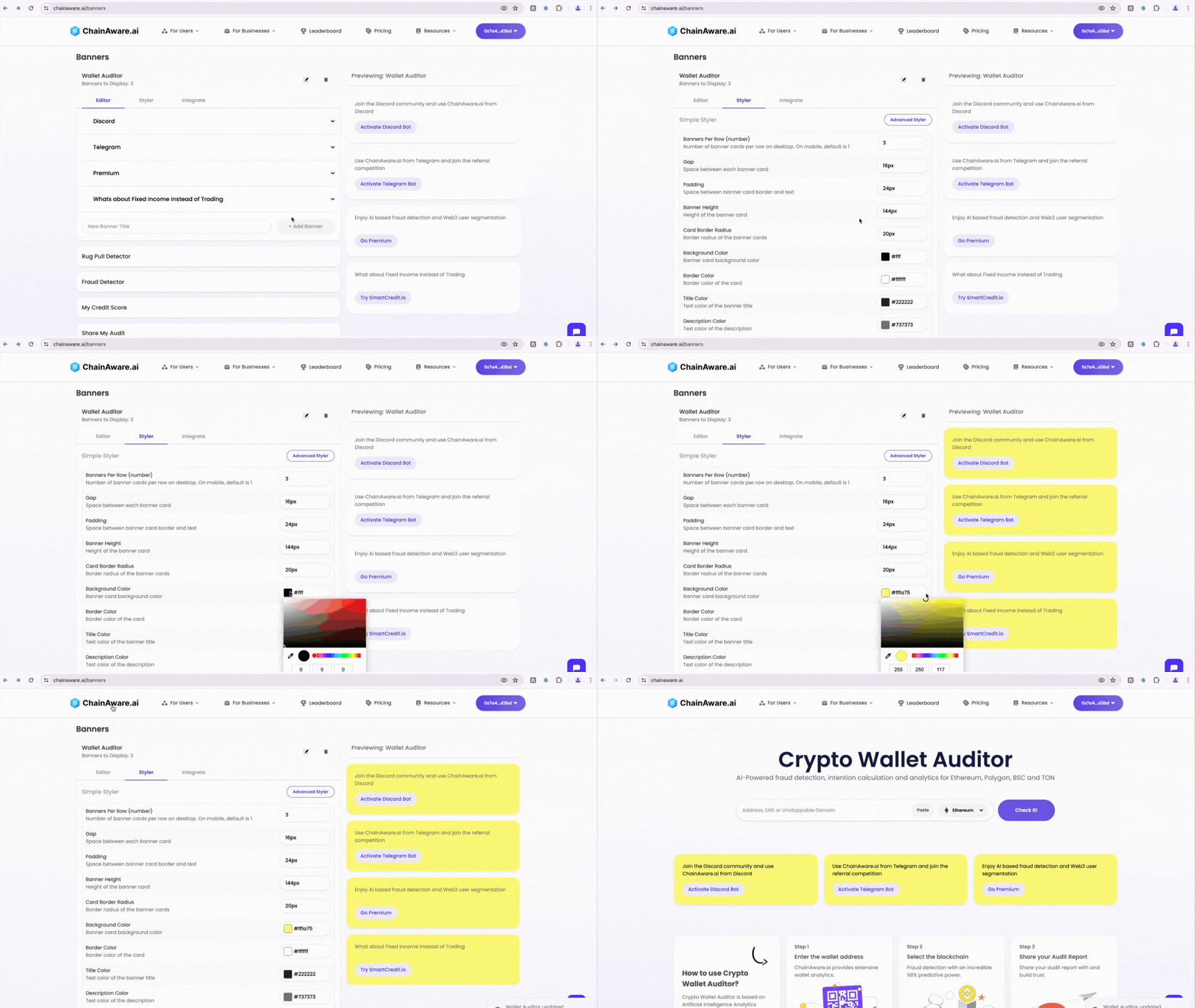
ChainAware’s Growth Agents are the automated, no-code delivery mechanism for Web3 Persona-based personalization. They deploy via Google Tag Manager in under 30 minutes and require zero changes to your existing frontend or smart contracts.
Here is the moment-by-moment flow: a wallet connects to your Dapp. Before the user has taken any action, the Growth Agent reads their complete Web3 Persona from ChainAware’s Predictive Data Layer. Based on that persona, the agent selects the most relevant product or feature for this specific wallet, generates a personalized message calibrated to their experience level and current intentions, and displays a targeted CTA — all within milliseconds of the wallet connection.
The personalization is end-to-end: a DeFi Veteran with high Risk Willingness and predicted staking intentions sees a message about your high-yield staking options — written at an expert level with no hand-holding. A Newcomer with Conservative risk profile sees a message about your safest entry-level product — written simply, with guidance. A Moderate Intermediate with recent bridging behavior sees a message about your cross-chain liquidity options.
The SmartCredit.io deployment documented these results: 8x engagement improvement and 2x primary conversions from identical traffic, after deploying Growth Agents. No new ad spend. No new KOL campaigns. No new traffic. Just converting the existing traffic better, by speaking relevantly to each wallet instead of generically to all of them. Full details in the SmartCredit.io case study.
Delivery Mode 2: Prediction MCP (Developer API)
For teams who want to build Web3 Persona personalization directly into their product architecture, the Prediction MCP provides full programmatic access to ChainAware’s Predictive Data Layer via a standard API interface compatible with any AI agent, backend system, or custom application.
The integration pattern is simple: your application calls the Prediction MCP with a wallet address; the MCP returns the complete Web3 Persona (all five dimensions, with scores and probability distributions). Your application uses this persona as context for every interaction with that user — whether you’re powering an AI chatbot, a recommendation engine, a personalized onboarding flow, or a dynamic content system.
The Prediction MCP is particularly powerful for AI agent deployments: when your agent knows a user’s experience level, risk willingness, and current intentions before they type their first message, every response can be calibrated to their behavioral profile from the start. The agent greets a Veteran differently from a Newcomer. It recommends different products to Conservative users and Aggressive users. It times its prompts based on the user’s predicted intention window.
For DeFi platforms, the Prediction MCP enables a further set of applications beyond marketing: smarter liquidity management, automated strategy recommendations calibrated to user risk profiles, proactive engagement triggered by behavioral intention signals, and risk-adjusted product presentation. The five highest-impact applications are covered in our guide to Prediction MCP for DeFi.
Choose Your Integration Mode
Growth Agents (No-Code) or Prediction MCP (Developer API)
Growth Agents deploy in 30 minutes via Google Tag Manager — no engineering required. Prediction MCP gives your AI agents and backend systems direct access to 14M+ wallet profiles. Both deliver 1:1 Web3 Persona personalization at scale.
Web3 Behavioral Analytics: Understand Your Persona Mix
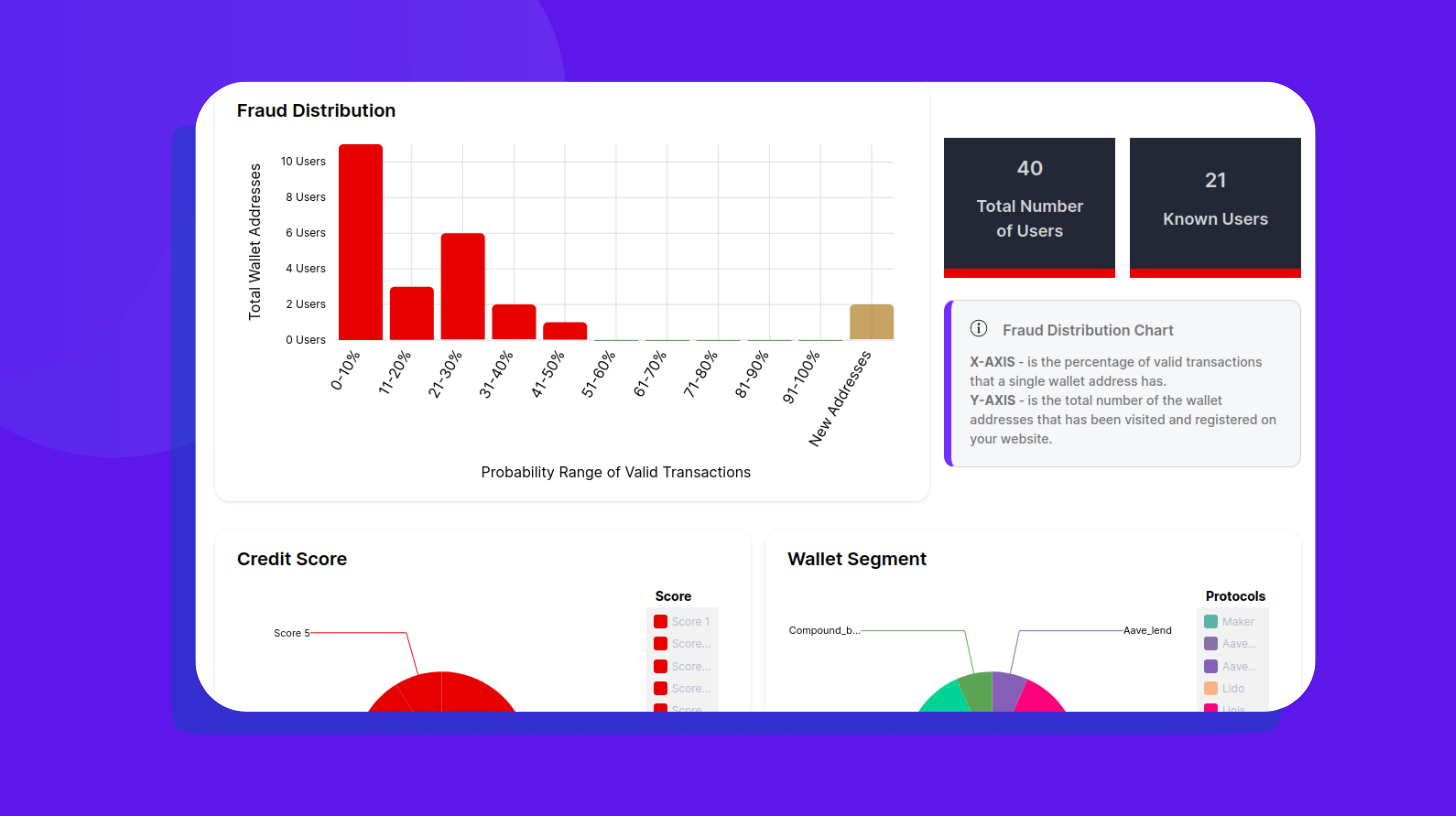
Before you can personalize for your users, you need to understand who they are in aggregate. ChainAware’s Web3 Behavioral Analytics dashboard gives you a real-time view of the persona distribution across all wallets connecting to your Dapp — free, via the same Google Tag Manager pixel that powers Growth Agents.
The analytics dashboard shows you: what percentage of your users are Veterans vs Intermediates vs Newcomers; the risk willingness distribution across your user base; the most common predicted intentions among currently active wallets; the Trust Score distribution; and how all these metrics change over time in response to your marketing and product decisions.
Web3 Analytics is the strategic layer that makes Growth Agents and Prediction MCP more effective: by understanding your actual user persona mix, you can calibrate your personalization rules to the reality of who is visiting — not who you hoped would visit. Full guide: Web3 Behavioral Analytics complete guide.
Persona-Based Marketing in Practice
DeFi lending protocol. A Veteran with Aggressive risk willingness and predicted borrowing intentions connects. Growth Agent message: “Maximize your leverage: borrow up to 85% LTV against your ETH.” A Newcomer with Conservative profile connects. Growth Agent message: “New to DeFi lending? Earn stable yield on your USDC — no leverage required.” Same protocol, same moment, completely different conversations.
DEX aggregator. A wallet with high predicted trading intentions and recent cross-chain activity connects. Prediction MCP instructs the AI agent: show the best cross-chain swap routes first. A wallet with staking history connects: show the staking and yield options instead. The product surface adapts to each user’s demonstrated behavioral pattern.
GameFi platform. A high-experience wallet with extensive NFT and gaming history connects: advanced gameplay mechanics, competitive modes, high-stakes leagues. A lower-experience wallet with no GameFi history connects: tutorial CTA, beginner leagues, lower-stakes entry point.
Airdrop campaign. Instead of the same message to everyone, segment by persona: Veterans get governance participation messaging; Intermediates get yield opportunity messaging; Newcomers get getting-started guidance. As explored in our complete Web3 marketing guide, persona-segmented campaigns consistently outperform generic ones on every conversion metric.
What Personalization Actually Delivers
The SmartCredit.io case study — documented in our SmartCredit case study — measured the specific impact of deploying Growth Agents on a live DeFi lending platform: 8x engagement improvement and 2x primary conversions from identical traffic, with no change in acquisition spend.
According to Salesforce research on connected customer experience, personalization drives retention as strongly as conversion — users who receive relevant experiences are more likely to return and increase their engagement over time.
Web3 Personas vs Mass Marketing: Full Comparison
| Dimension | Mass Marketing | Web3 Personas |
|---|---|---|
| Message | Same to everyone | Persona-specific |
| Data source | Cookies, guesses | Verified on-chain history |
| Conversion rate | < 3% average | 8–12% with Growth Agents |
| Cost model | Burns budget continuously | Performance-based, compounds |
| Retention | Low — generic UX | High — relevant UX |
| User intelligence | None | Complete behavioral profile |
| Scales with | More ad spend | More data — better over time |
| Integration | Ad networks, email | GTM pixel or developer API |
ChainAware.ai — Web3 Persona Intelligence
Stop Broadcasting. Start Conversing. Convert Real Users.
Web3 Analytics to understand your persona mix. Wallet Auditor to explore individual profiles. Growth Agents for automated 1:1 personalization. Prediction MCP for developer-level behavioral intelligence. Built on 14M+ wallet profiles across 8 networks.
Frequently Asked Questions
What is a Web3 Persona and how is it different from a traditional marketing persona?
A Web3 Persona is a behavioral profile calculated from a wallet’s complete on-chain history — verified, immutable facts about what a user has actually done rather than guessed demographics. It includes Experience Level, Risk Willingness, Predicted Intentions, Wallet Rank, and Trust Score. Traditional marketing personas are approximations; Web3 Personas are behavioral reality.
Do I need to change my smart contracts or frontend to use Web3 Personas?
No. Growth Agents deploy via Google Tag Manager in under 30 minutes with zero engineering changes. The Prediction MCP requires API integration but no blockchain-level changes.
How many wallets does ChainAware’s Predictive Data Layer cover?
14M+ wallets across 8 networks: Ethereum, BNB Chain, Base, Polygon, Solana, TON, Tron, and Haqq. Pre-calculated profiles return persona data instantly on wallet connection.
What conversion improvement can I expect from Web3 Personas?
The SmartCredit.io case study documented 8x engagement and 2x primary conversions from identical traffic. Industry average DeFi conversion is under 3%; Growth Agents typically deliver 8–12%.
Can I use Web3 Personas alongside my existing marketing channels?
Yes — and this delivers the highest ROI. Your existing channels drive traffic. Web3 Personas convert that traffic more effectively. A $25k influencer campaign converting at 10% instead of 2–3% produces 3–5x more transacting users from the same spend.