Verifying AI Agents at Checkout: Tokens, Mandates and Behavioral Evidence
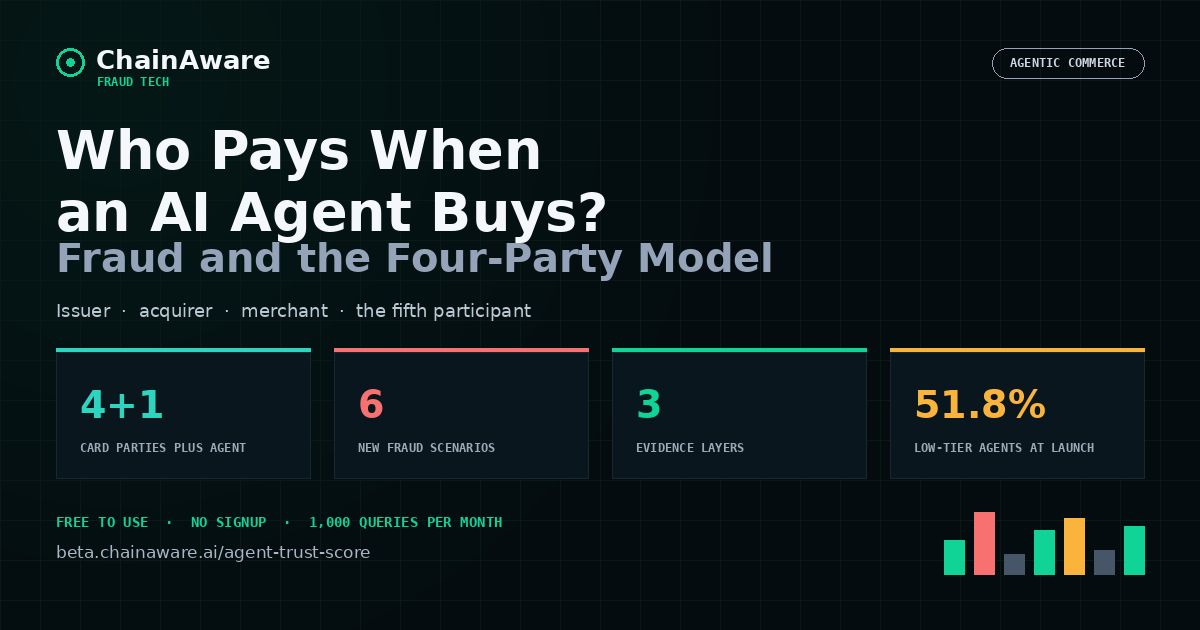
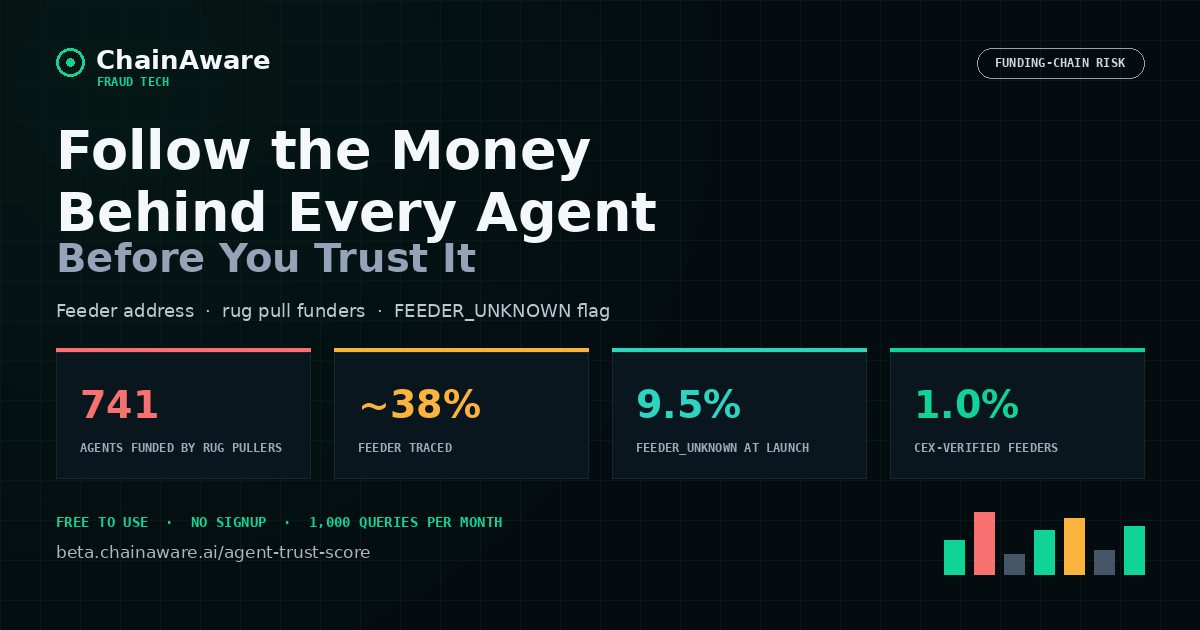
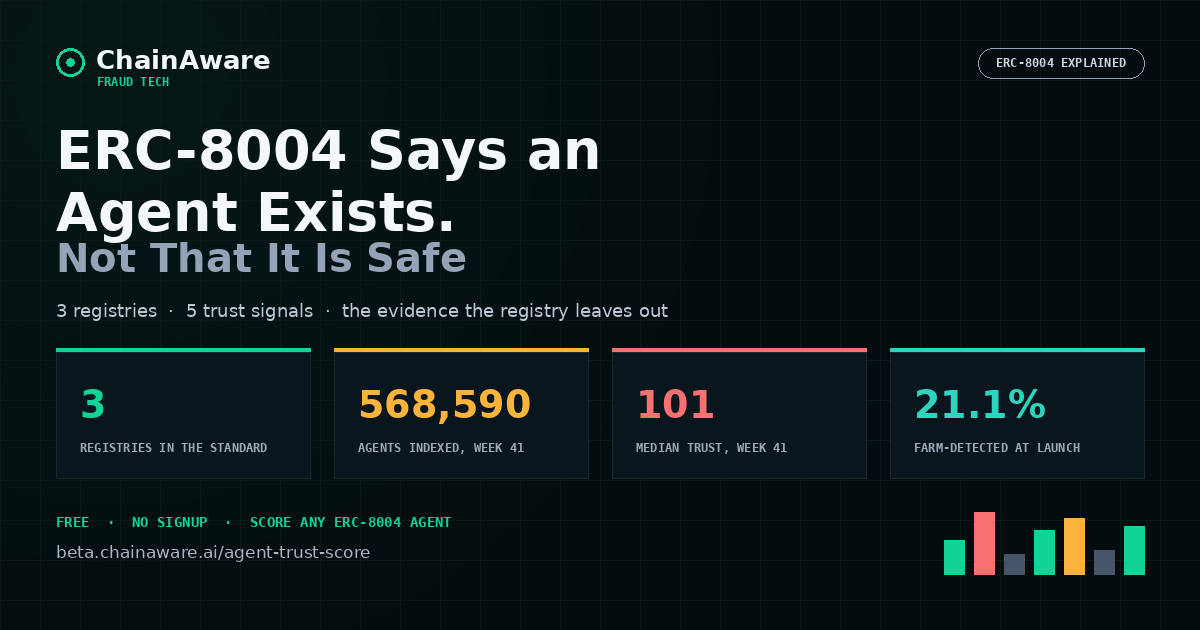
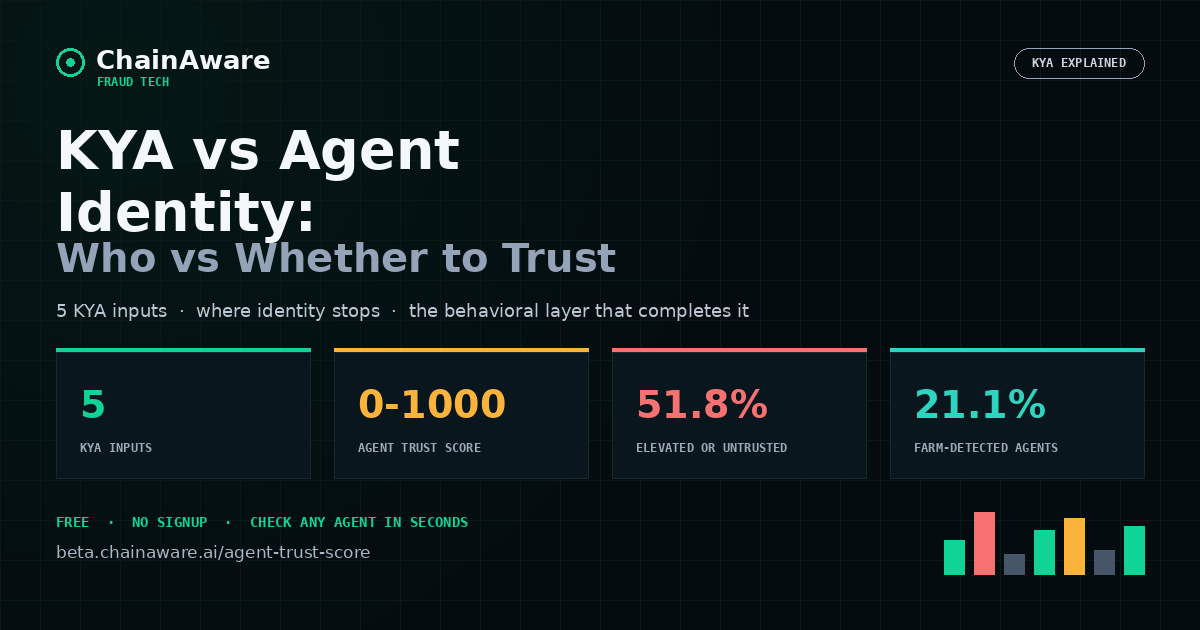
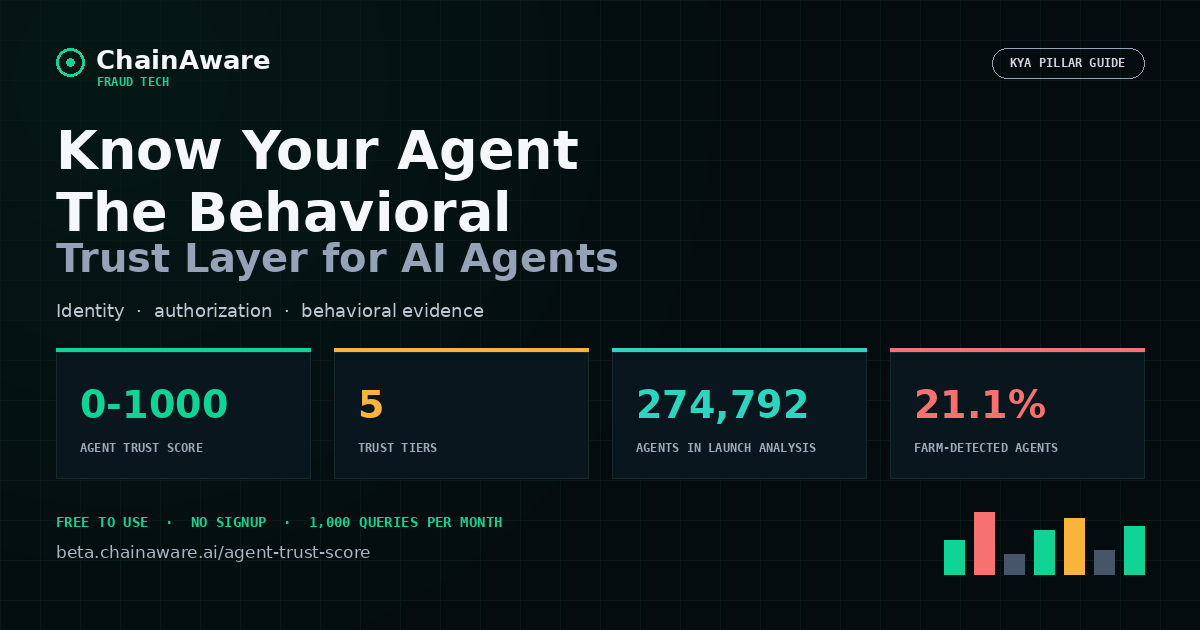
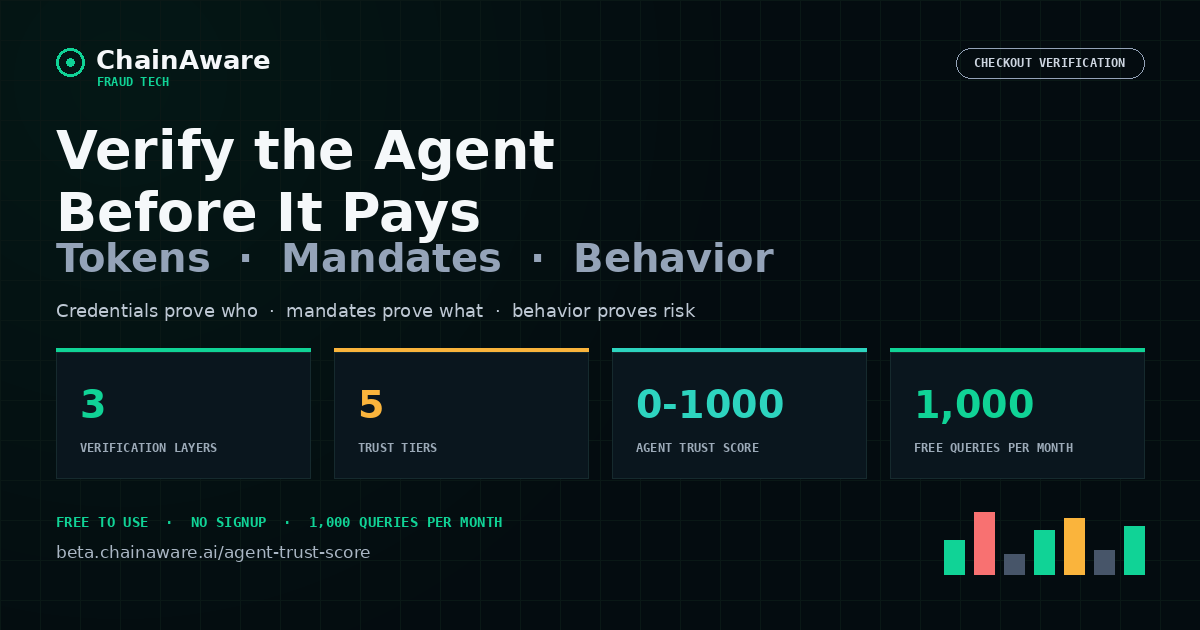
A checkout page used to ask one question: is this customer who they say they are? With AI agents, it must ask three. Who is this agent, what did the user allow it to do, and how risky is the operator behind it? This guide walks merchants, payment providers and platforms through the three-layer verification stack for AI agents at checkout. Layer one – credentials and payment tokens (OpenAI/Stripe Agentic Commerce Protocol, Google AP2, Trulioo Digital Agent Passport, ERC-8004) – proves who the agent is and how it pays. Layer two – signed mandates – proves what the user allowed, covering AP2 intent, cart and payment mandates and what to check at authorization time. Layer three – behavioral evidence – is the only layer that separates a trustworthy agent from a well-documented bad one: owner wallet fraud probability, feeder funding chain, creator rug pull and honeypot history, and fleet-level farm detection. At launch, 51.8% of 274,792 indexed ERC-8004 agents sat in the Elevated Risk or Untrusted tiers despite holding valid credentials. ChainAware’s Agent Trust Score supplies the behavioral layer as a 0 to 1,000 score with five tiers and named flags. The guide includes a six-step decision flow, a flag reference table, attack scenarios, merchant-type playbooks and a 60-day rollout plan. Free tier covers 1,000 queries per month with no signup.