ChainAware Launches Agent Trust Score — On-Chain Trust Scoring for the Agentic Commerce Era

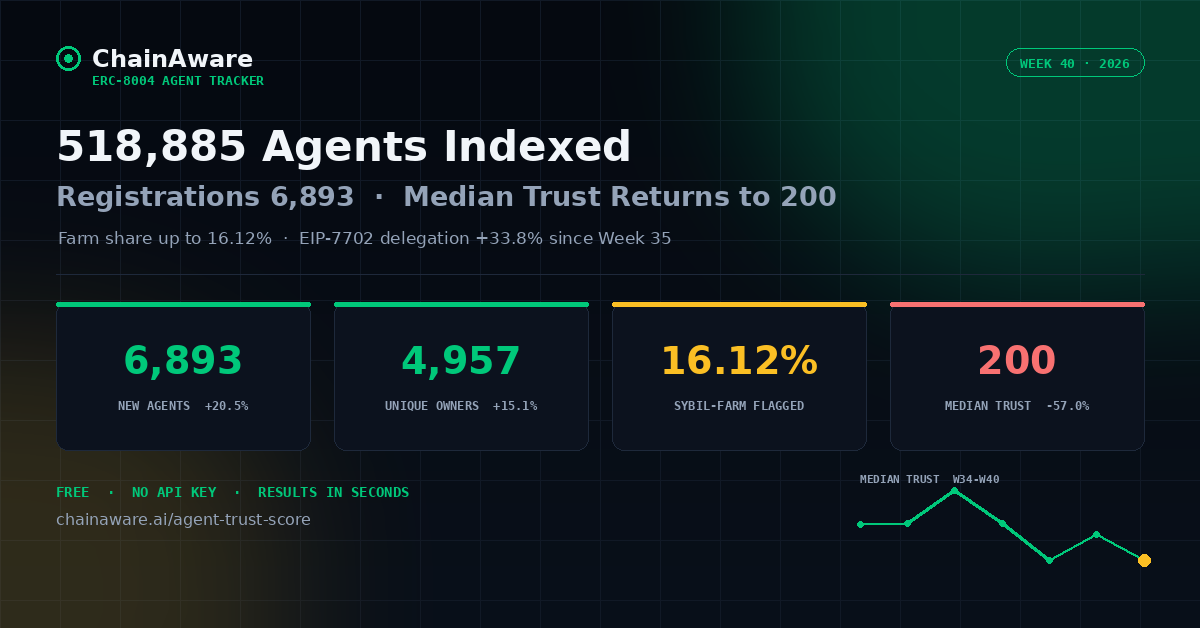
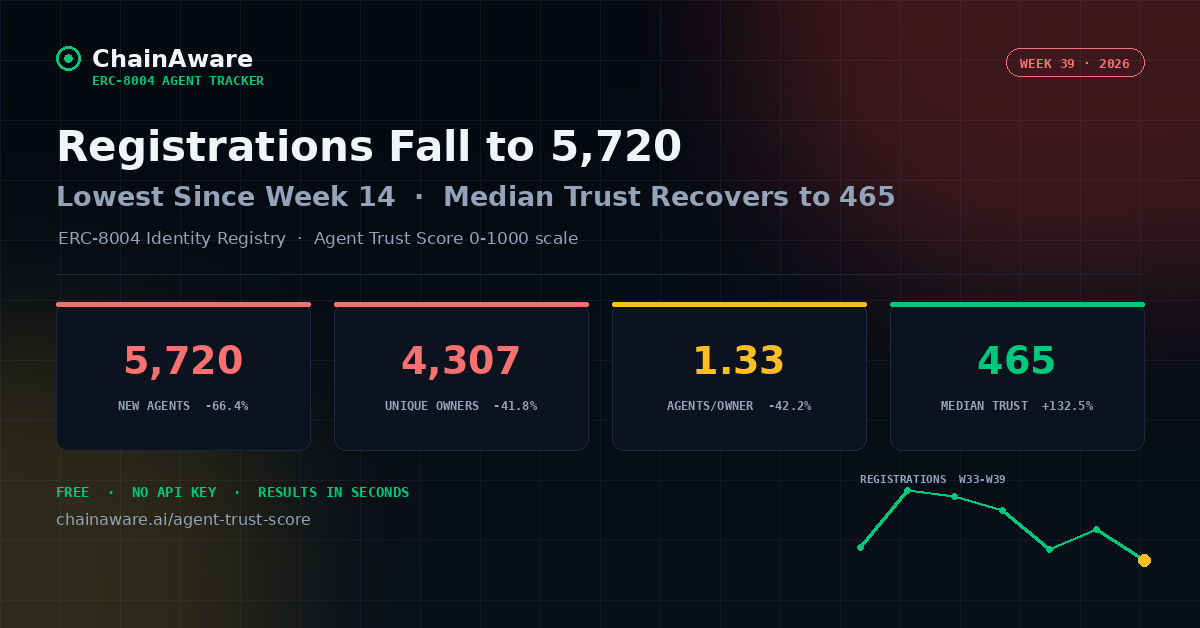
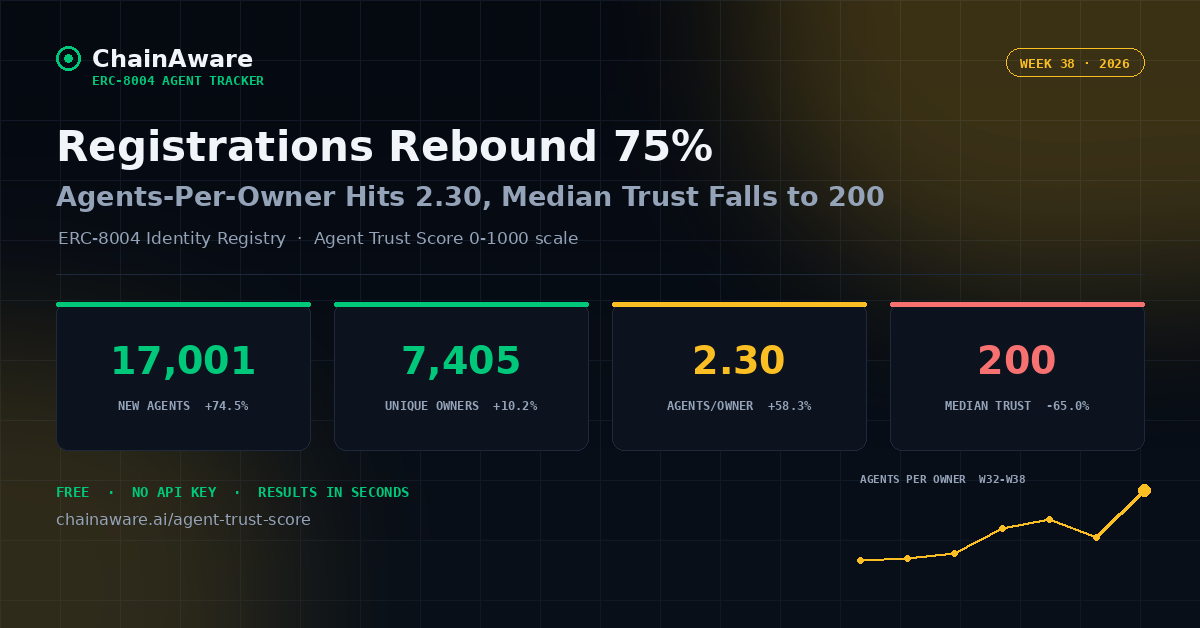
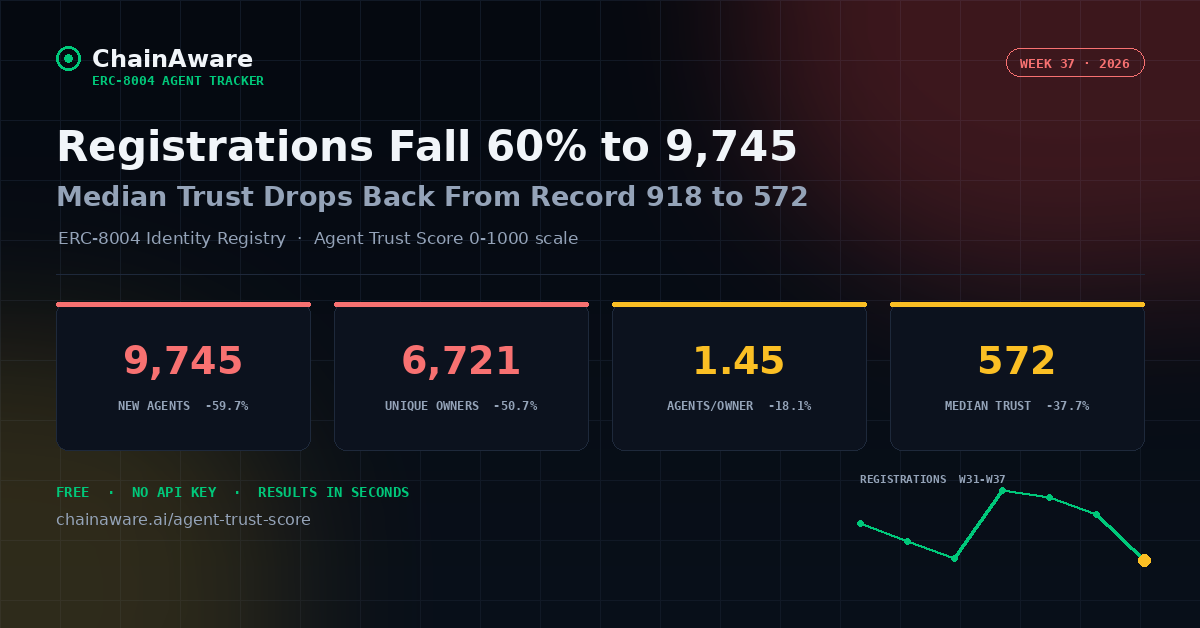
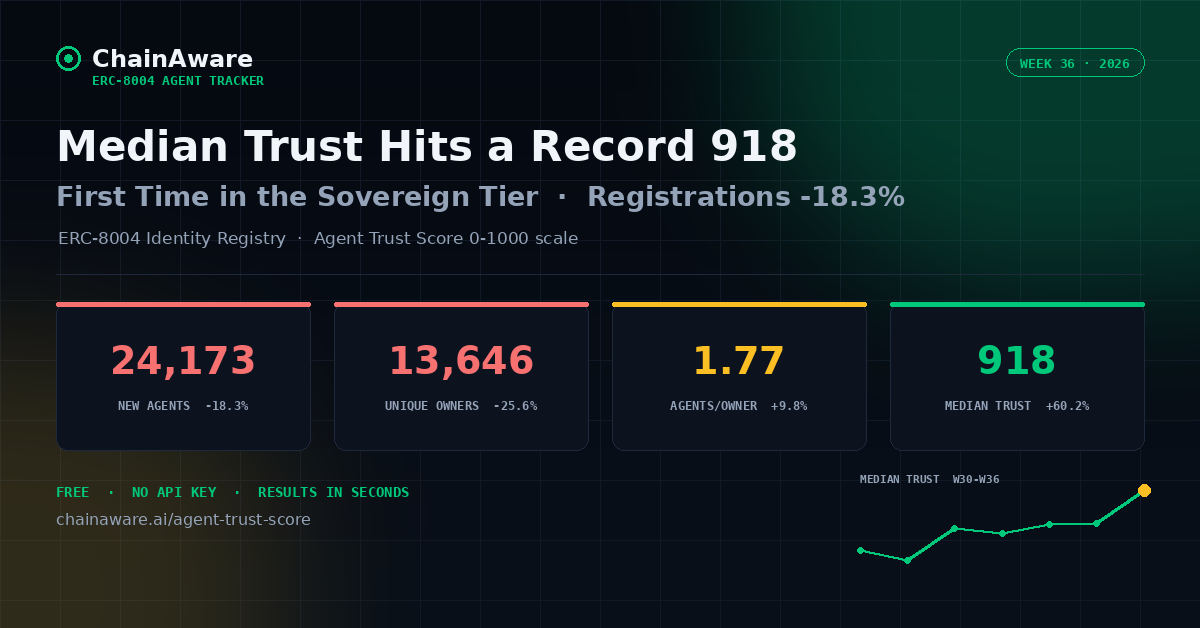
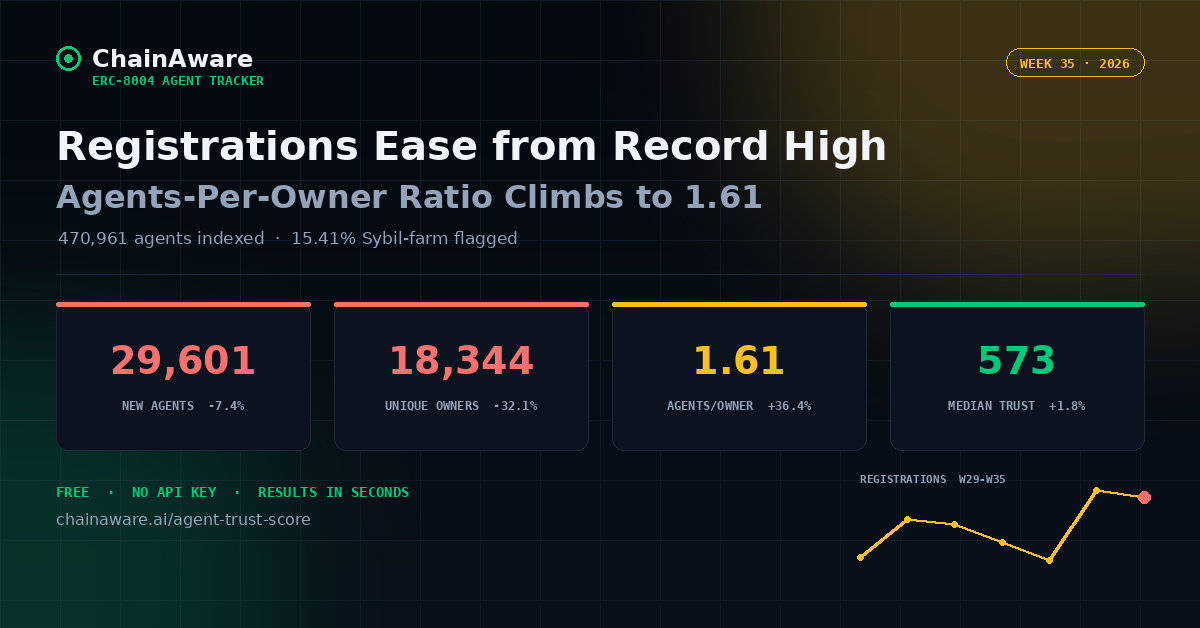
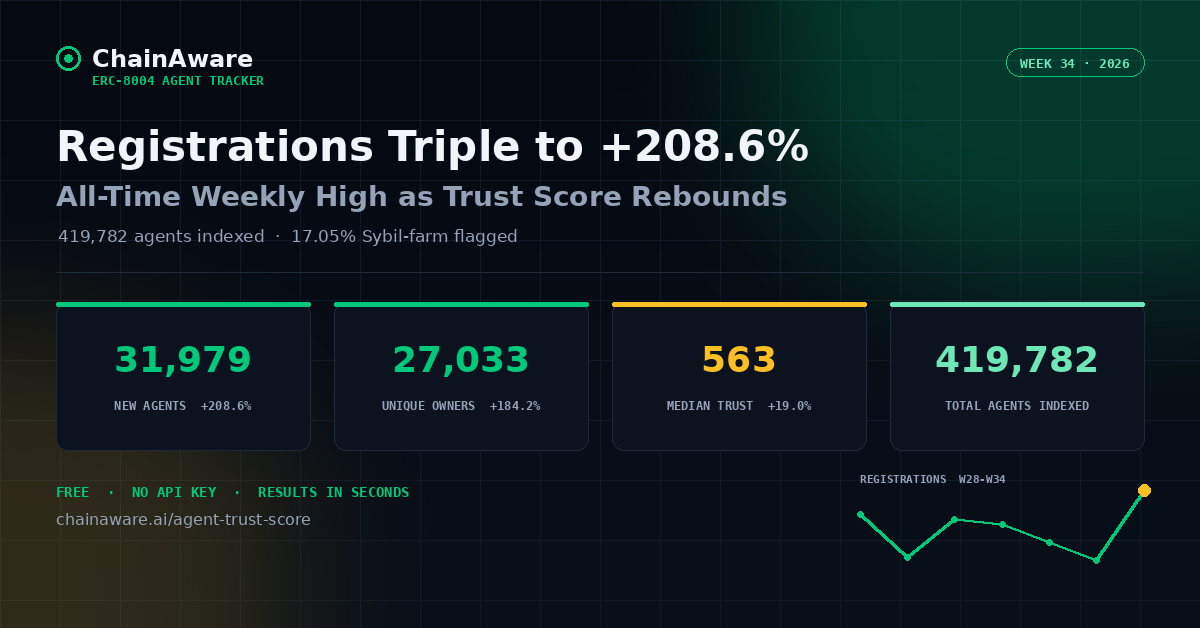
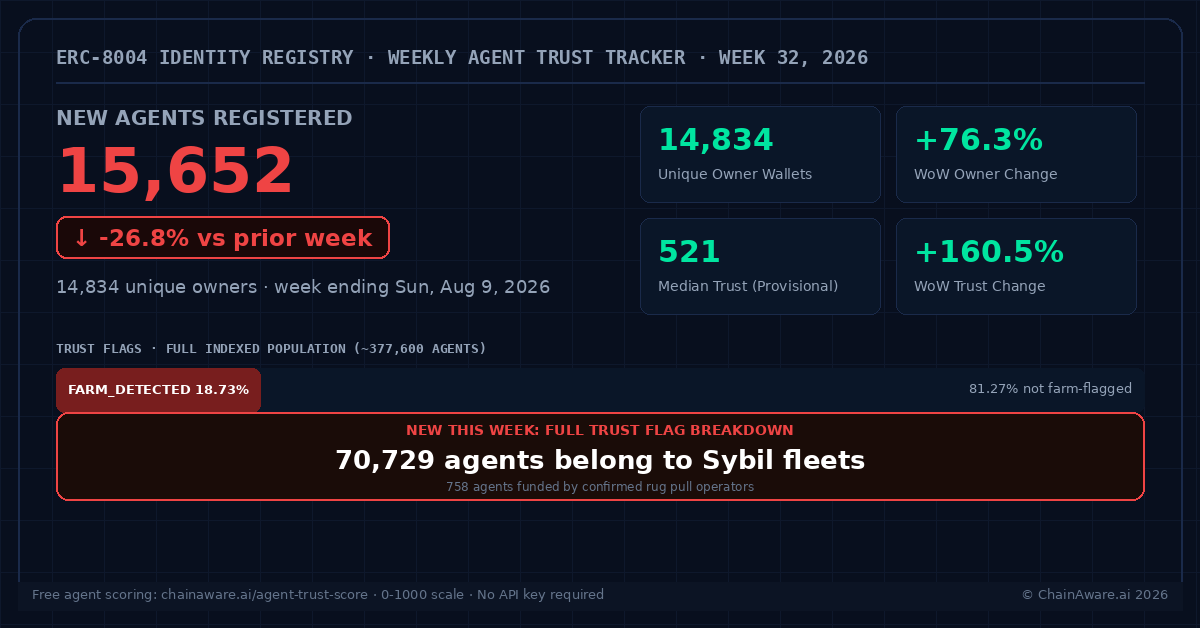
ChainAware launches Agent Trust Score – the first on-chain trust scoring system for ERC-8004 registered AI agents. 274,792 agents indexed. 26% score Untrusted. 21.1% are farm-detected Sybil operations. Free, no signup required.

ChainAware Launches Agent Trust Score – On-Chain Trust Scoring for the Agentic Commerce Era

ChainAware launches Agent Trust Score – the first on-chain trust scoring system for ERC-8004 registered AI agents. Analysis of 274,792 indexed agents reveals 51.8% carry Elevated Risk or Untrusted scores, 21.1% are farm-detected Sybil operations, and 741 agents were funded by confirmed rug pull operators. Score owner wallet fraud probability, feeder address, and rug pull criminal record before granting autonomous execution access. Named in CB Insights AI Fraud Prevention Market Map. Free, no signup required.

The Agent Trust Infrastructure Race: Who Is Building the Trust Layer for Agentic Commerce?

Six platforms are competing to become the trust layer for agentic commerce in 2026 – ERC-8004 native, RNWY, SkyeProfile, AXIS T-Score, DJD, and ChainAware. Each answers a fundamentally different question. This guide maps every methodology, every blind spot, and the five signals only one platform provides, with a decision matrix for DeFi builders, agent creators, and investors.

The First Step in Agentic Commerce Isn’t Integration. It’s Trust.

The ERC-8004 registry tells you an agent exists. It does not tell you whether to trust it. This guide explains why Know Your Agent (KYA) is the missing trust layer for DeFi protocol builders in 2026 – and how scoring the owner wallet, feeder address, and rug pull history closes the gap before funds move.

Web3 Trust Verification Systems in 2026 – The Complete Five-Category Landscape

Web3 lost over $3.6 billion to fraud in the first three quarters of 2025 – and 57.8% of those losses came not from smart contract bugs but from access-control failures. Trust in Web3 is not one problem. It is five distinct problems requiring five distinct solutions, and most protocols are only covering one.