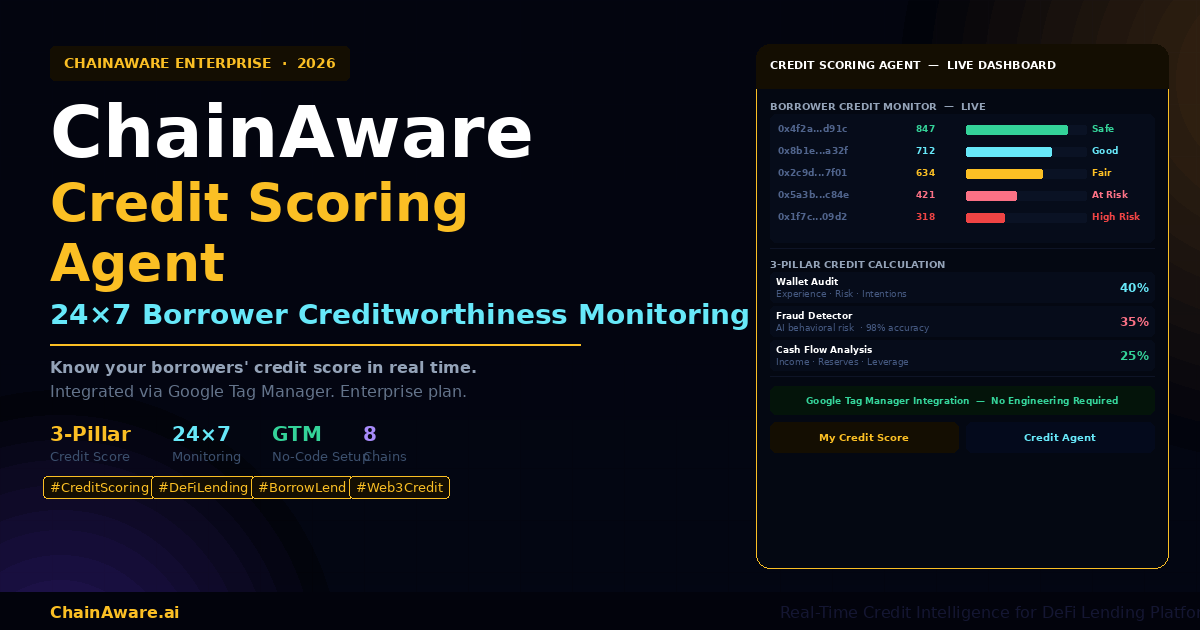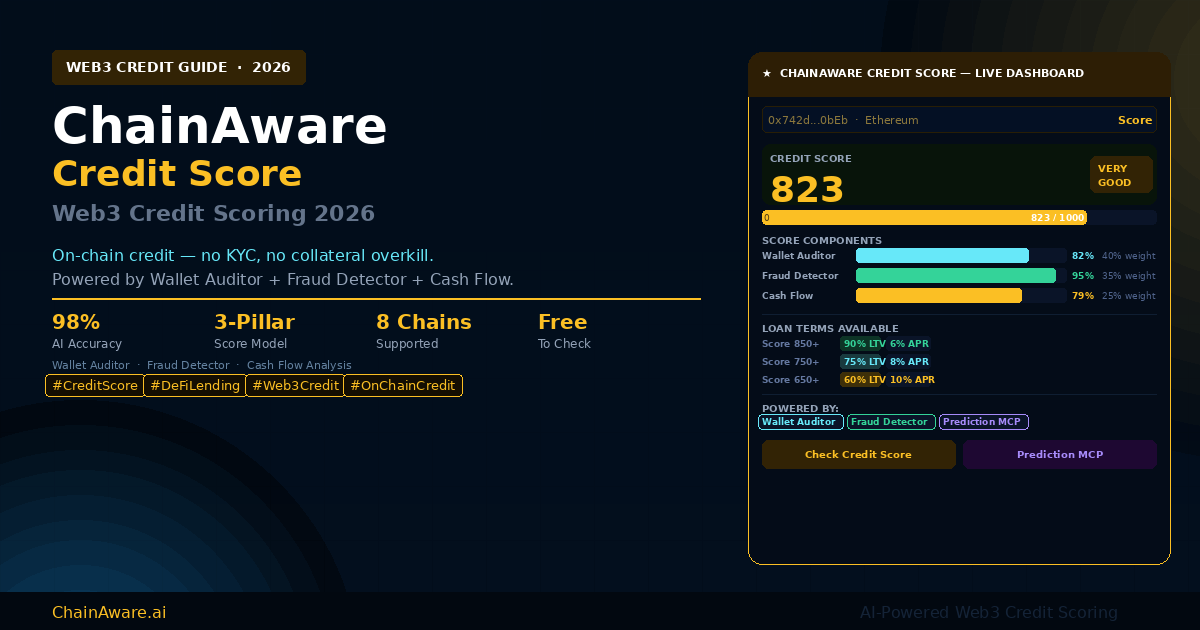
ChainAware Credit Scoring Agent: Real-Time Borrower Monitoring for DeFi

Borrower creditworthiness changes after a loan is issued — most DeFi protocols don’t notice until it’s too late. This guide covers ChainAware’s Credit Scoring Agent: 24/7 real-time borrower monitoring via Google Tag Manager, powered by a 3-pillar AI score combining Wallet Audit, Fraud Detection, and Cash Flow Analysis.

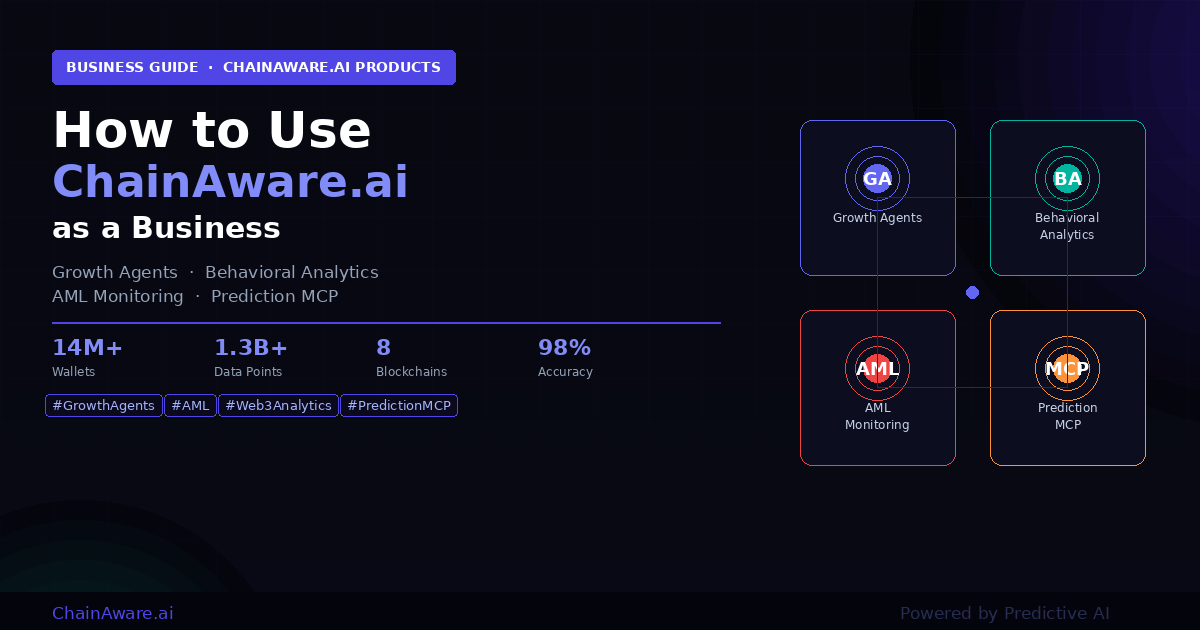
How to Use ChainAware.ai as a Business: Growth Agents, Analytics, AML & Prediction MCP

How to use ChainAware as a Web3 business — four products covering growth, analytics, compliance, and AI agent integration. Covers Growth Agents for 1:1 wallet outreach, Behavioral Analytics via GTM pixel, Transaction Monitoring and AML, and Prediction MCP for any LLM. All built on 20M+ wallet profiles across 8 blockchains.

Elephant in the Room: Influencer Marketing Isn’t Working in Web3

KOL marketing in Web3 costs $250+ per tweet and $25K+ per campaign — and buys temporary attention, not users who transact. This guide explains why influencer marketing fails the two real Web3 growth challenges and how behavioral wallet profiling at connection converts anonymous visitors into first-time transactors.

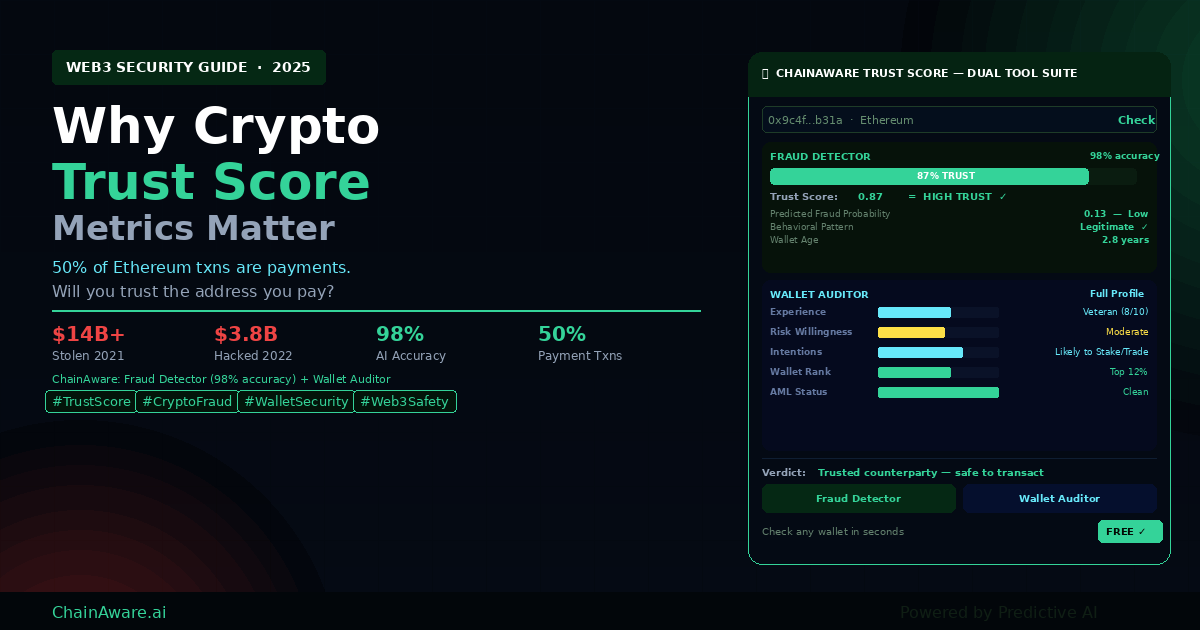
Why Crypto Trust Score Metrics Are Important

50% of Ethereum transactions are payments — yet the payment layer has almost no security infrastructure. This guide explains why crypto trust score metrics matter for real-time counterparty verification, how predictive fraud scoring differs from reactive blocklists, and why checking any wallet before transacting is the most important security habit in Web3.

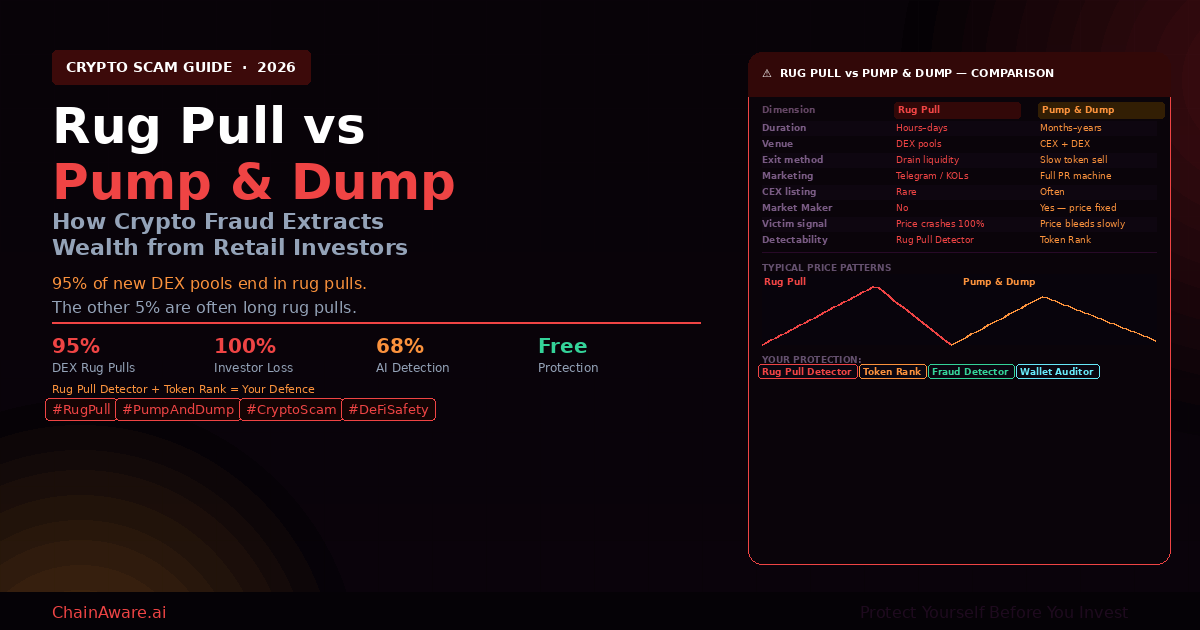
Rug Pull vs Pump and Dump: How Crypto Fraud Extracts Wealth from Retail Investors (2026 Guide)

Rug pulls drain liquidity overnight — token worthless by morning. Pump and dump schemes extract value slowly over weeks through insider sell-offs. Both are engineered to maximize retail losses. This 2026 guide explains how each works, how to tell them apart, and which ChainAware tools detect each type before you invest.

Best Crypto Hardware Wallets in 2026 (Complete Guide)

Hardware wallets protect your private keys — but that’s only half of crypto security. This 2026 guide reviews the top hardware wallets (Ledger Nano X, Trezor Model T, Coldcard Mk4, Keystone Pro, Foundation Passport) and covers the second half most guides ignore: verifying every counterparty before you send irreversible funds.

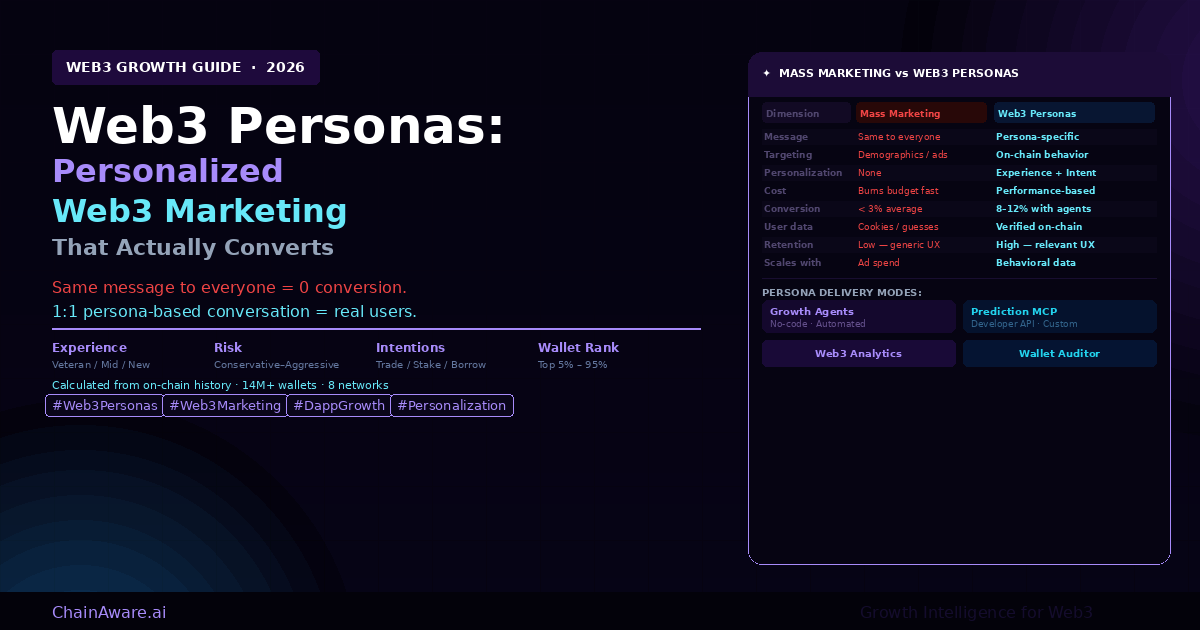
Web3 Personas: Personalizing Web3 Marketing That Actually Converts (2026 Guide)

Blockchain holds the richest behavioral data in marketing history — yet most Web3 projects send the same message to every wallet. This 2026 guide covers how Web3 Personas classify connecting wallets by behavioral profile and how personalized messaging at connection converts Power Traders, Yield Farmers, DeFi Curious, and Newcomers differently.

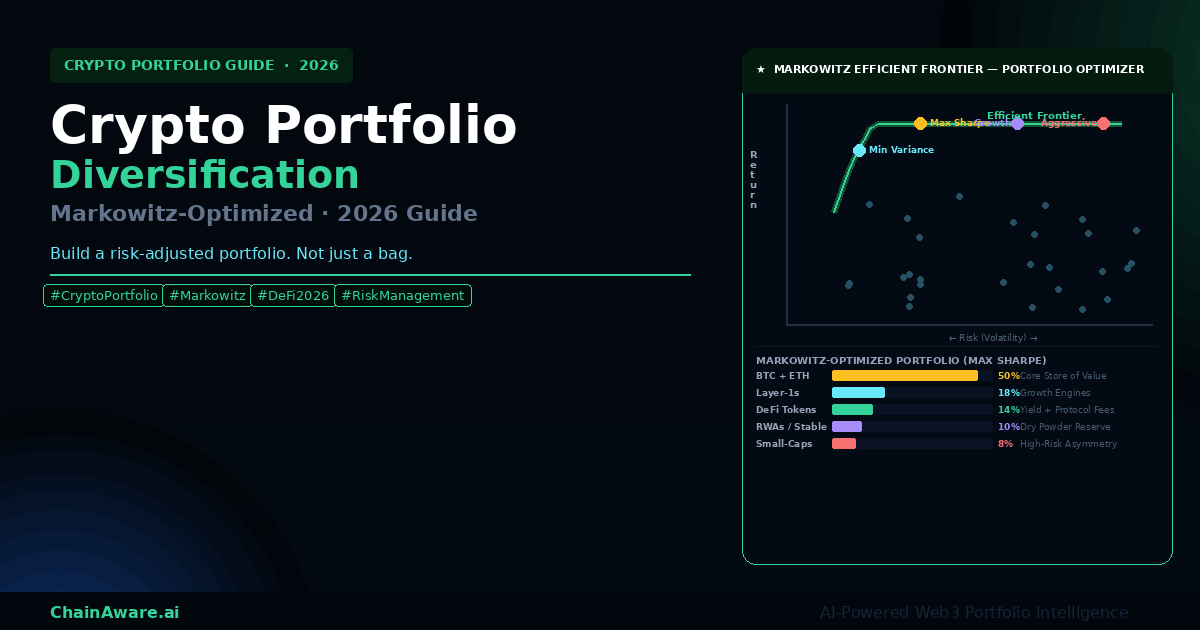
Diversifying Your Crypto Portfolio: A Guide to Maximizing Returns and Minimizing Risk

Crypto portfolio diversification in 2026 goes beyond holding Bitcoin and Ethereum. This guide covers Markowitz Modern Portfolio Theory applied to crypto, efficient frontier construction, asset correlation, market-cap tiering, sector diversification across DeFi, L1, L2, NFT, GameFi, and AI tokens, and rebalancing strategies for volatile markets.

Behavioral User Segmentation: The Web3 Marketer’s Goldmine in 2026

Every wallet’s transaction record is a complete financial decision log — the richest behavioral dataset in marketing history. This guide covers how behavioral user segmentation works in Web3, why on-chain data outperforms cookies and surveys, and how DApp teams use ChainAware’s 20M+ wallet profiles to target, convert, and retain the right users.

Crypto AML versus Crypto Transaction Monitoring: What’s the Difference and Why You Need Both

AML checks where funds came from. Transaction monitoring predicts what a wallet will do next. Most DeFi protocols run one but not the other — leaving a critical gap that sophisticated fraudsters exploit with clean funds. This guide explains the difference, the regulatory basis for both, and why you need them together.