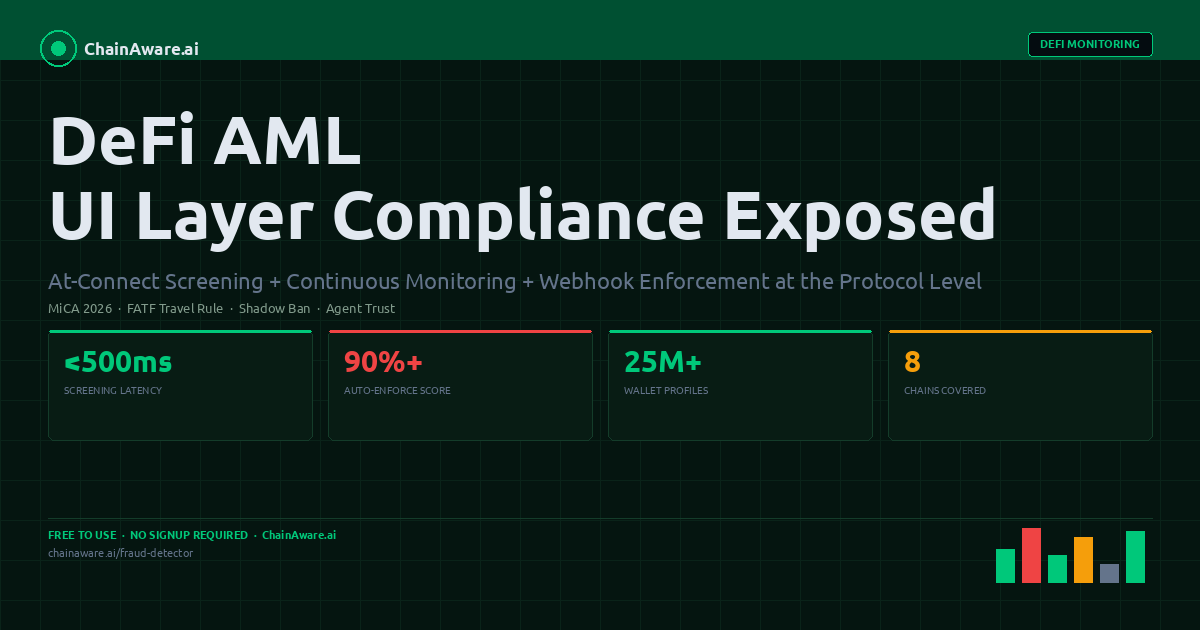
DeFi AML Compliance: How Protocols Monitor and Act on Risky Wallets at the UI Layer
DeFi AML compliance 2026: at-connect screening, continuous monitoring, UI layer enforcement. MiCA, FATF, FinCEN obligations for DeFi protocols covered.

In-depth guides, original research, and analytical frameworks for Web3 builders, compliance officers, and investors navigating blockchain fraud, AI agent risk, token safety, and DeFi growth. This category publishes the ChainAware research team’s findings on ERC-8004 agent fraud patterns, weekly rug pull tracker data, wallet behaviour taxonomies, funding-chain risk methodology, and market maps. Guides cover technical topics — how to integrate AML transaction monitoring, how to read a token audit report, how to evaluate an agent trust score — alongside strategic topics like vendor selection, compliance roadmap planning, and the economics of fraud prevention. If you want to go deeper than the news cycle, this is where ChainAware publishes its methodology.
DeFi AML compliance 2026: at-connect screening, continuous monitoring, UI layer enforcement. MiCA, FATF, FinCEN obligations for DeFi protocols covered.
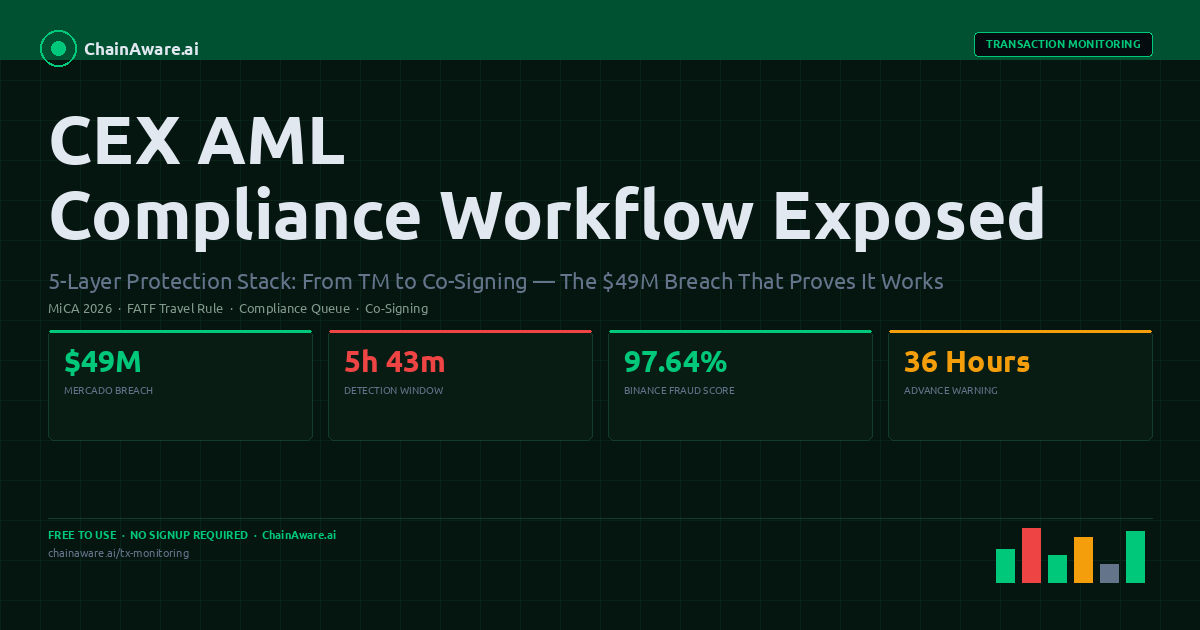
CEX AML compliance 2026: transaction monitoring to co-signing. Mercado Bitcoin $49M case study shows where workflows fail. MiCA, FATF, AMLA requirements covered.
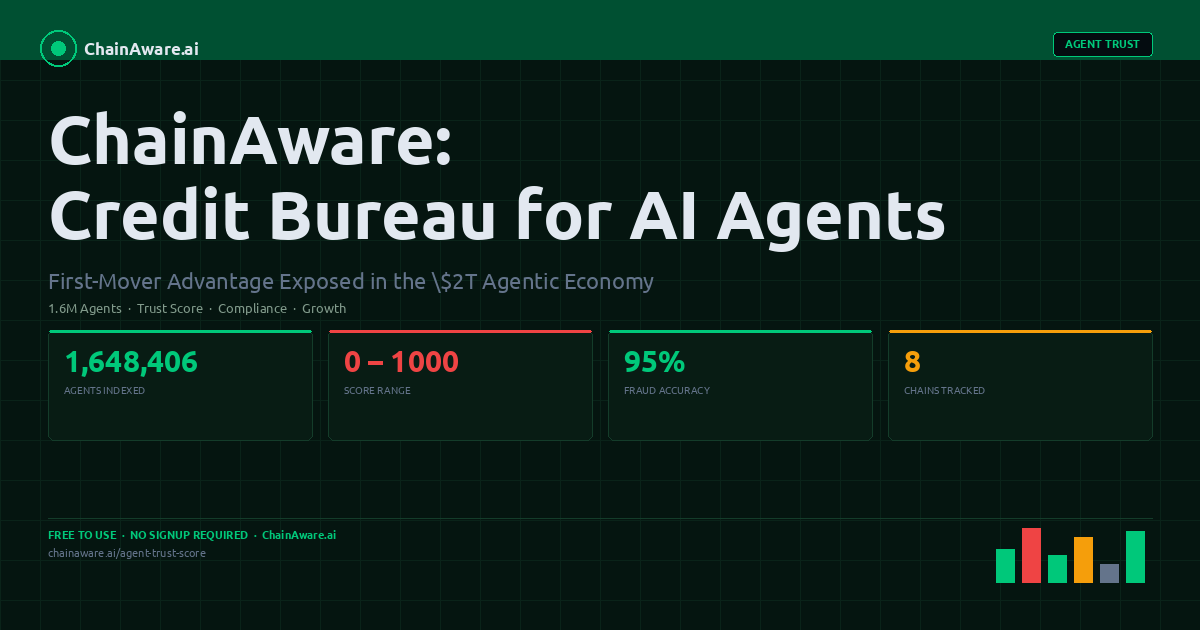
AI agents are becoming autonomous economic actors—transacting, holding funds, and executing smart contracts without conventional identity or track record. Yet counterparties have no standardised way to assess their trustworthiness. ChainAware is building the credit bureau for this moment: a behavioral trust infrastructure indexed across eight chains, scoring 1.6 million agents, and trained on over 23 million wallet personas.
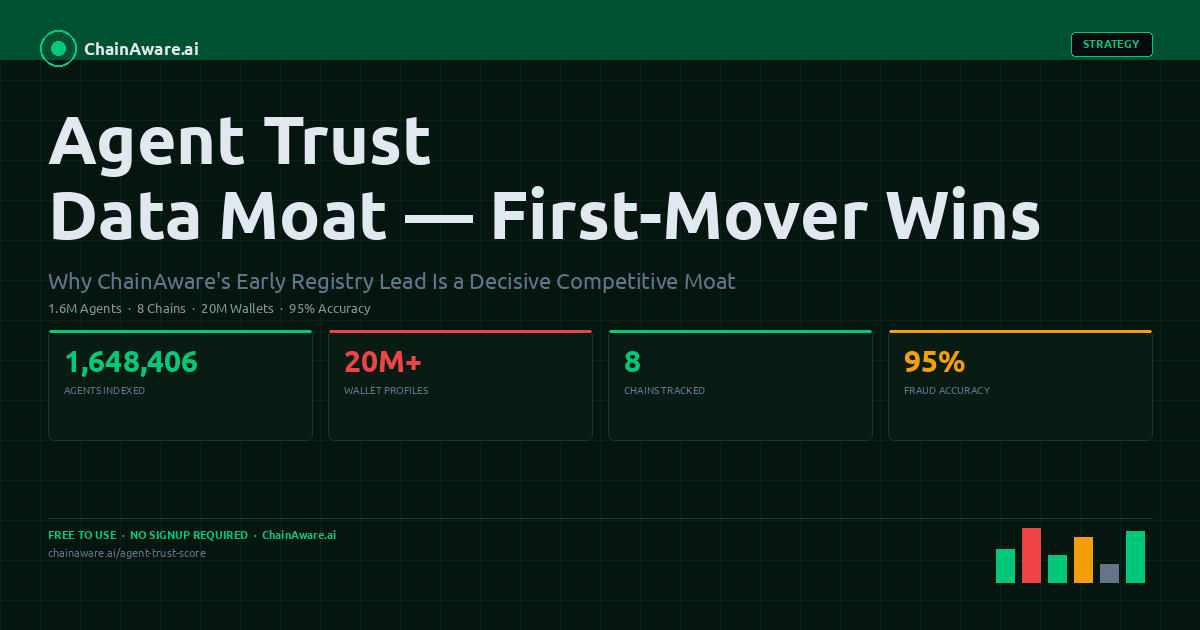
The first mover in AI agent trust infrastructure doesn’t just collect more data—they collect data that cannot be replicated. ChainAware.ai has indexed 1.6 million agents with behavioural histories stretching back months, creating a scoring advantage that grows stronger with every new registration.
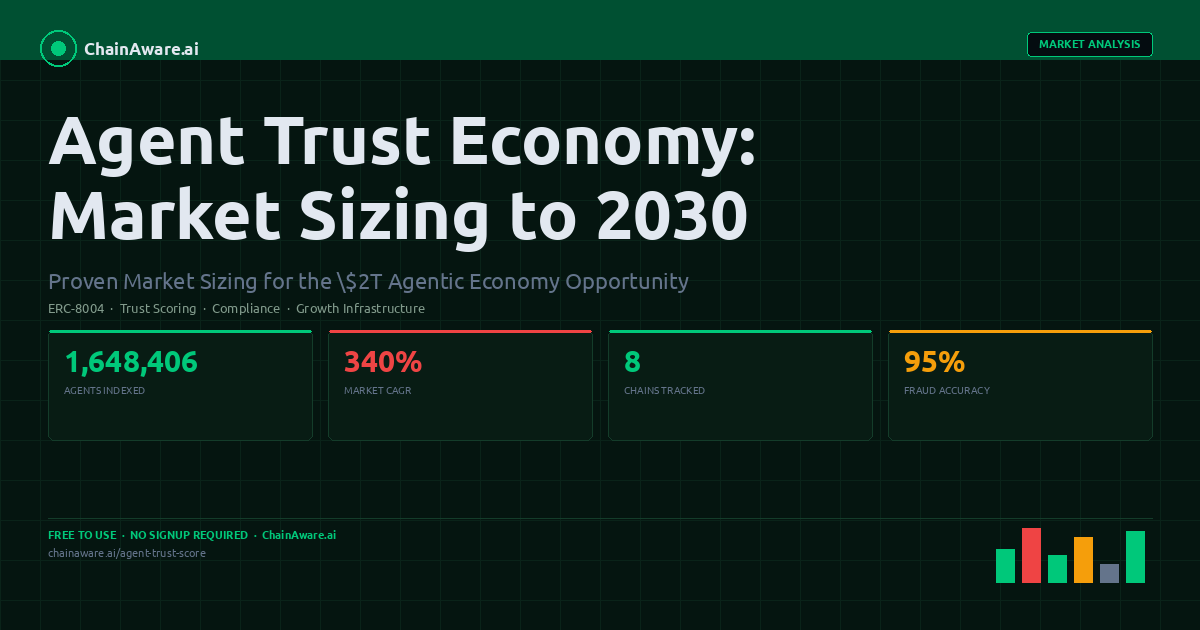
The agent economy isn’t emerging—it’s already here. ChainAware has indexed 1.65 million ERC-8004 agents across eight major chains, with weekly registrations exceeding 892,924 in October alone. Yet an alarming 82.5% score in elevated risk or untrusted tiers, driven by unknown feeder addresses and payment-adjacent operations.
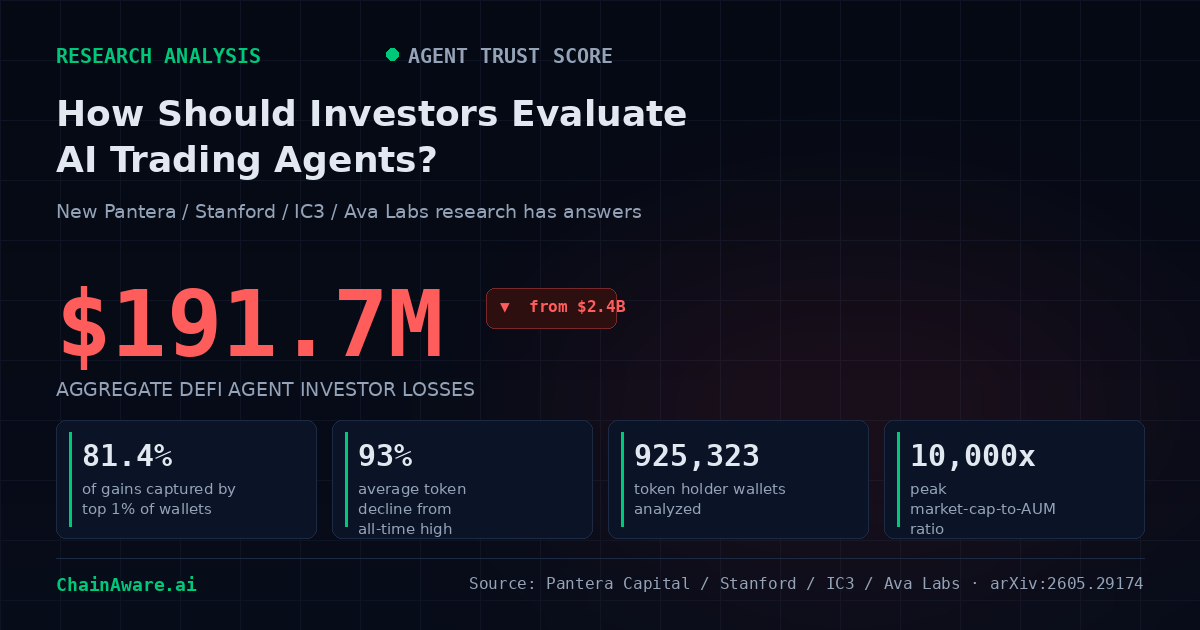
A May 2026 study from researchers affiliated with Pantera Capital, Stanford, IC3, and Ava Labs analyzed 1,900+ AI-tagged crypto projects to answer a practical question: how can investors tell a genuinely autonomous AI trading agent from a speculative wrapper? The research found even agents with fully public wallets couldn’t be verified as autonomous, and documents $191.7M in aggregate token holder losses across 925,323 wallets, with the top 1% of wallets capturing 81.4% of all gains ($1.81B).
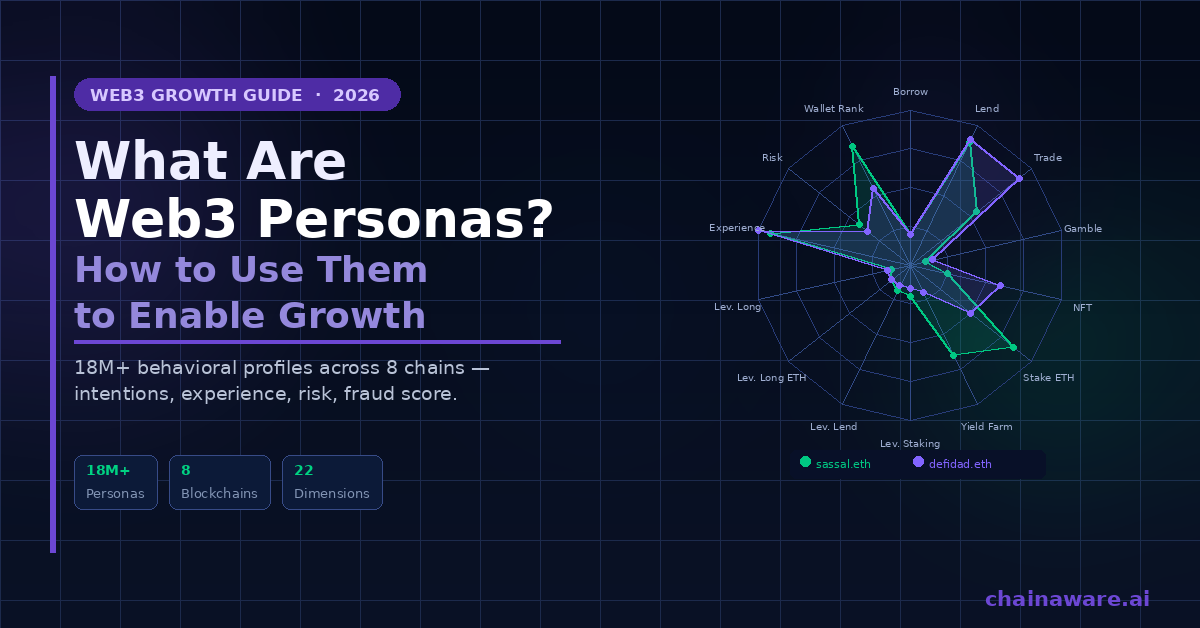
A Web3 Persona is a calculated behavioral profile of who is behind any wallet address – their intentions, experience level, risk appetite, and predicted next actions. This guide explains what they are, how ChainAware builds 18M+ of them across 8 blockchains, and how DApps use them to enable real growth.
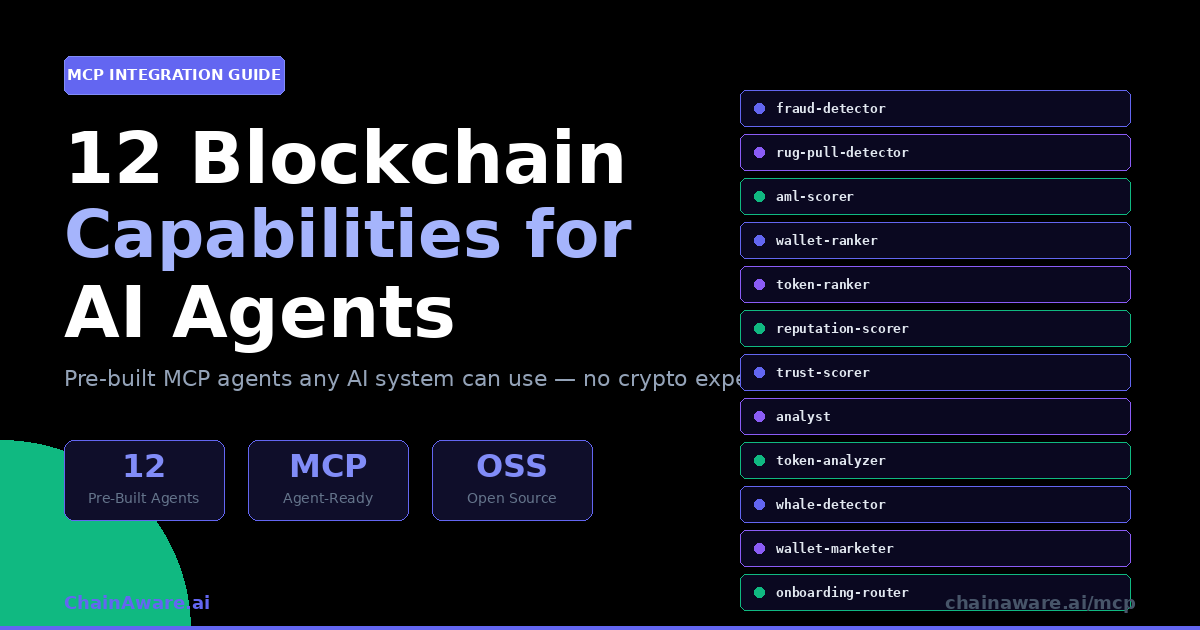
Any AI agent – Claude, GPT, or custom LLM – can access 20M+ wallet behavioral profiles, 98% fraud prediction, real-time AML screening, and token holder analysis via ChainAware’s MCP integration. This guide covers all 12 blockchain capabilities, how to connect in minutes, and which agent definition to use for each use case.
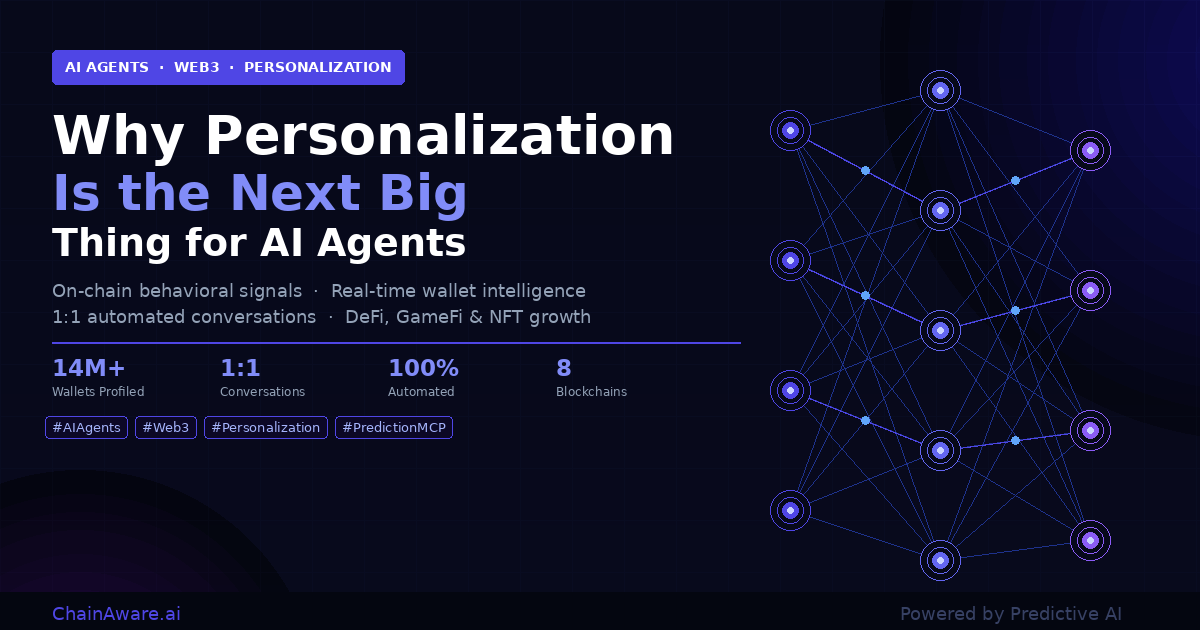
Generic AI agents fail Web3 users because every wallet is different – different experience, risk tolerance, intentions, and protocol preferences. This guide explains why wallet-level behavioral personalization is the next frontier for AI agents in Web3 and how ChainAware’s Prediction MCP delivers 1:1 personalization at connection across 20M+ profiles.
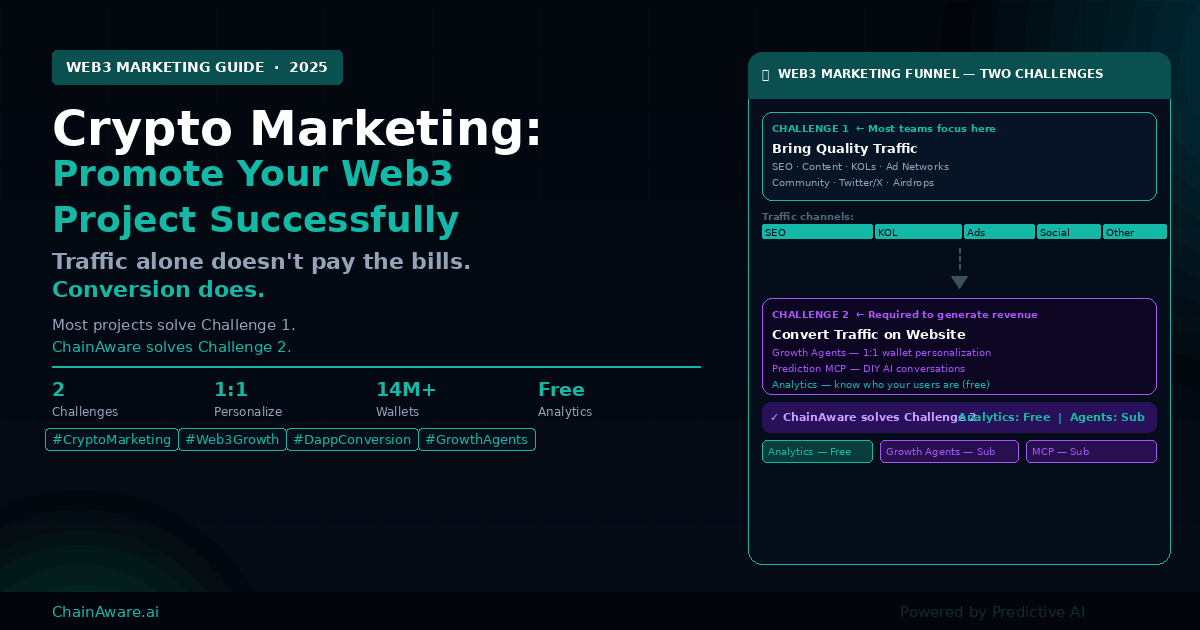
The complete 2026 guide to crypto marketing – SEO, community building, KOL marketing, ad networks, Discord/Telegram growth, Twitter strategy, and airdrop campaigns. Plus the missing half most projects ignore: converting traffic into transacting users with behavioral wallet intelligence rather than generic landing pages.