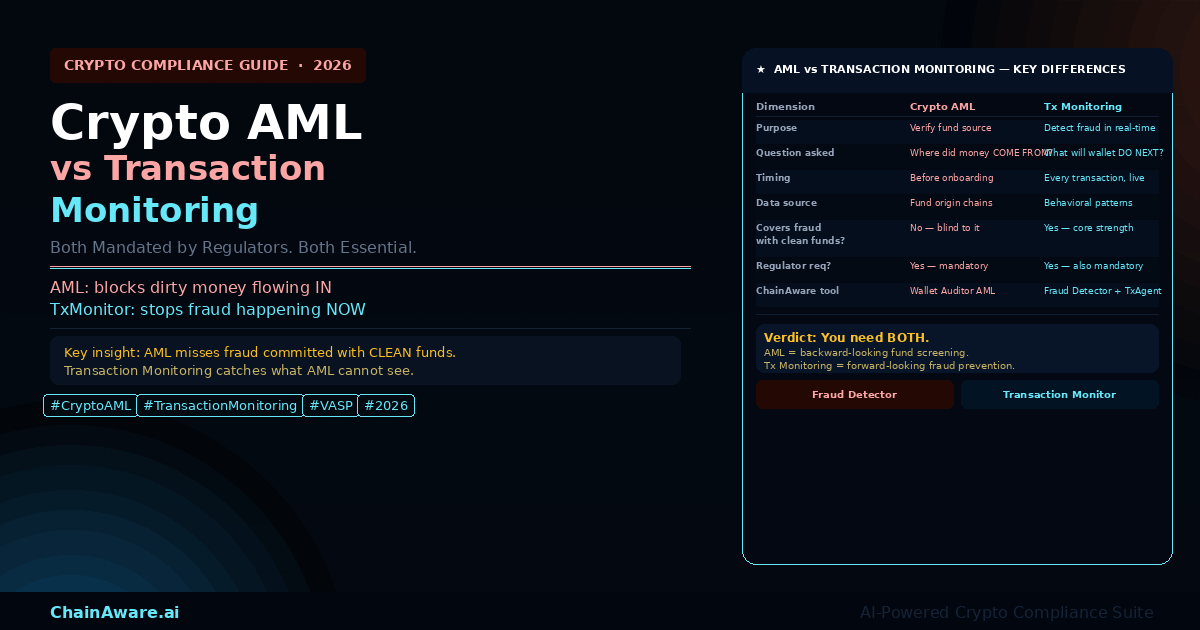
Crypto AML versus Crypto Transaction Monitoring: What’s the Difference and Why You Need Both

AML checks where funds came from. Transaction monitoring predicts what a wallet will do next. Most DeFi protocols run one but not the other – leaving a critical gap that sophisticated fraudsters exploit with clean funds. This guide explains the difference, the regulatory basis for both, and why you need them together.
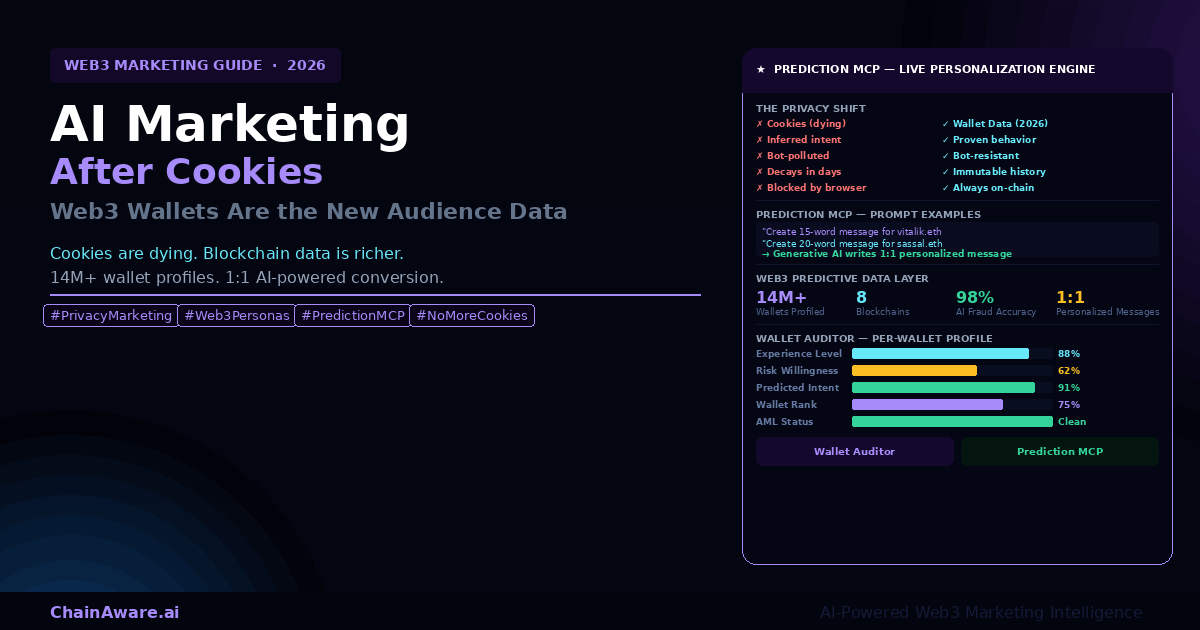
Using AI for Marketing in the Privacy Era

Third-party cookies are dying across Chrome, Firefox, and Safari – but Web3 marketers are getting stronger, not weaker. Blockchain wallet data is richer than any cookie: every transaction, protocol interaction, and behavioral pattern is on-chain and public. This guide covers how to build cookie-free 1:1 personalized marketing using on-chain behavioral intelligence.

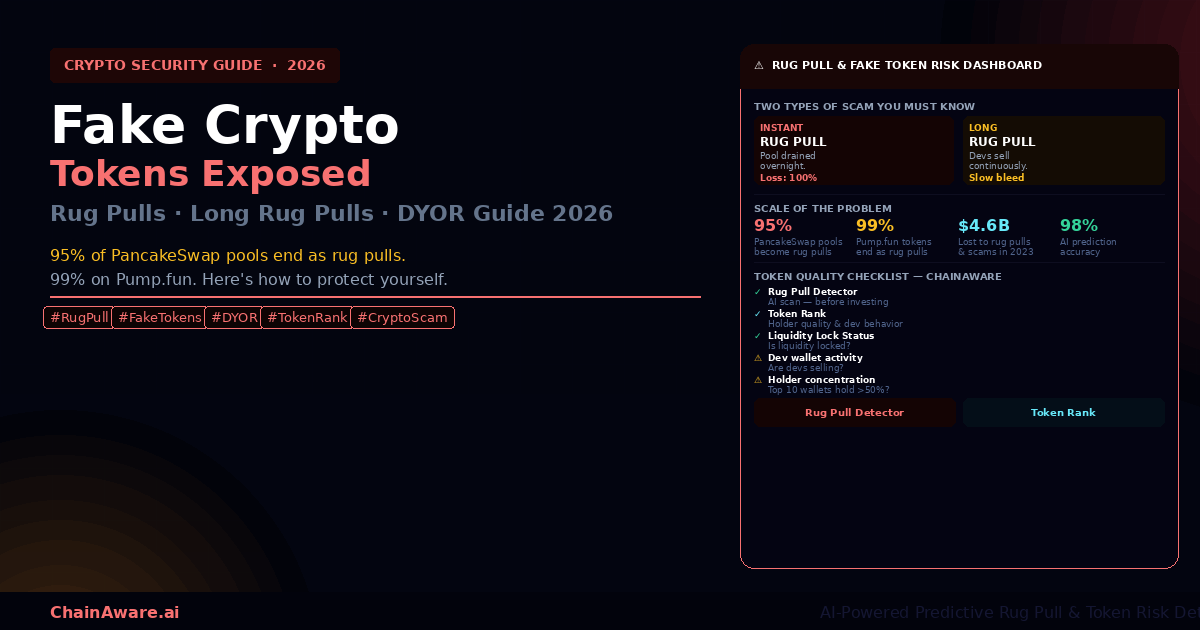
How to Identify Fake Crypto Tokens in 2026: Rug Pulls, Long Rug Pulls, and DYOR

95% of PancakeSwap pools end as rug pulls. 99% of Pump.fun tokens extract money from buyers. This 2026 guide explains how to identify fake crypto tokens before investing – covering instant rug pulls, slow pump-and-dump schemes, the red flags to check manually, and which AI tools automate the detection for you.

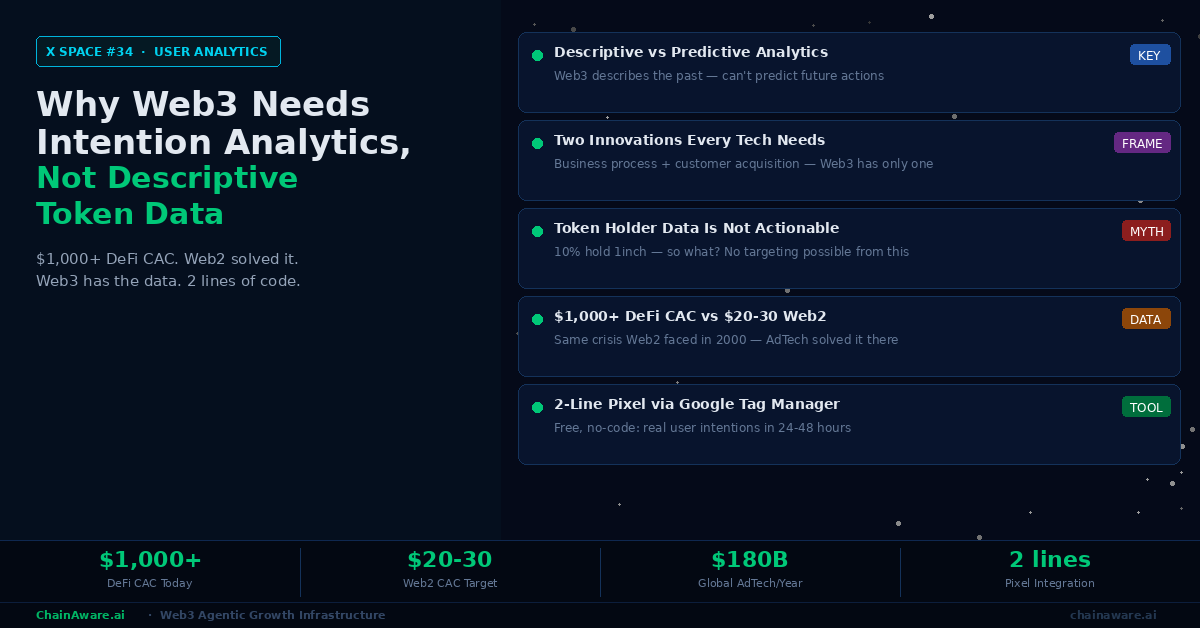
Why Web3 Needs Intention Analytics, Not Descriptive Token Data

Descriptive token data tells you what happened. Intention analytics predicts what a wallet will do next. This guide – based on X Space #34 with ChainAware co-founders Martin and Tarmo – explains why the shift from descriptive to predictive analytics is the only path to reducing $1,000+ DeFi customer acquisition costs.

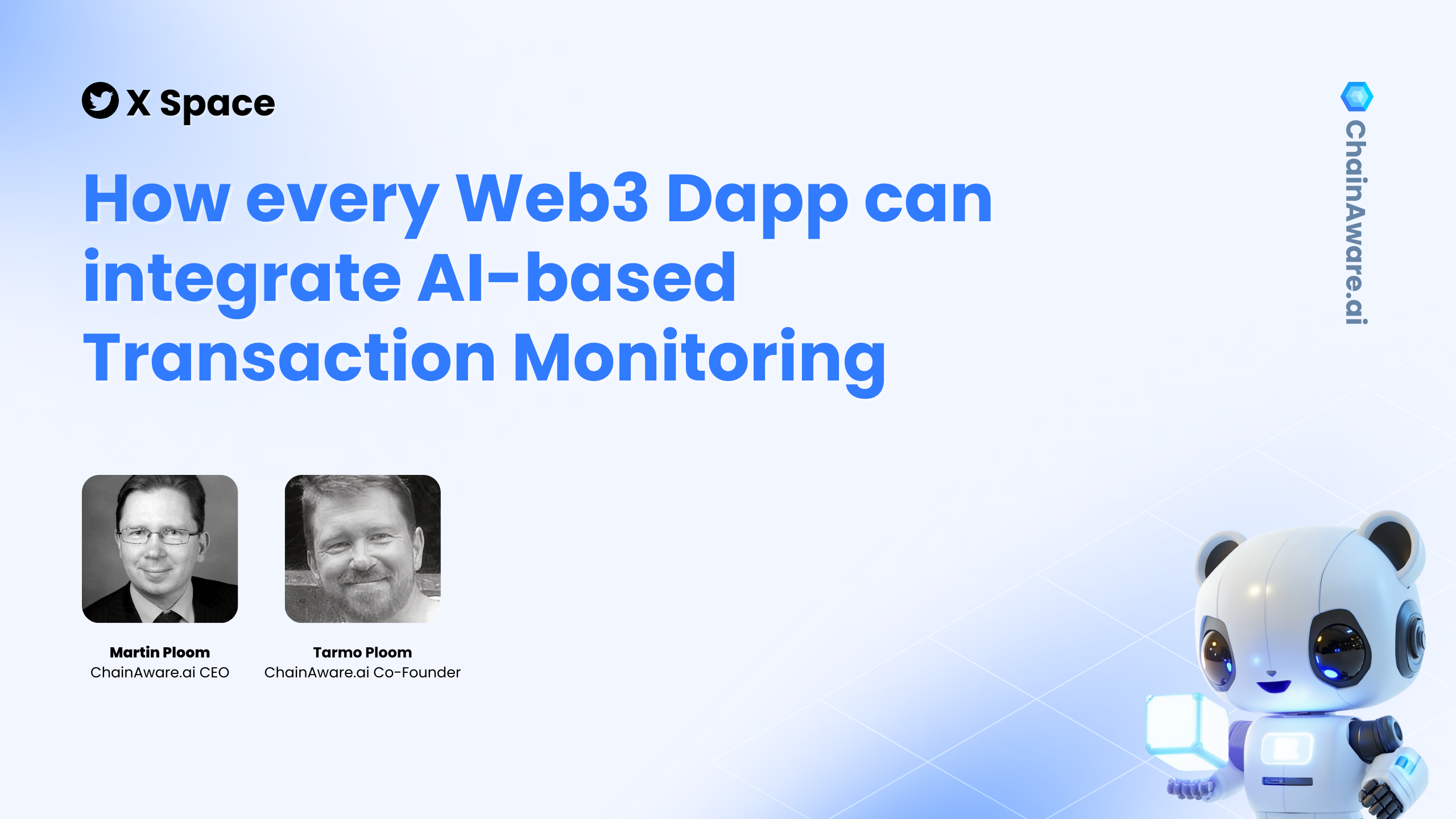
AML and Transaction Monitoring for DApps: The Guide

AML is rules-based and tracks the flow of bad funds. Transaction monitoring is AI-based and predicts future fraud from behavioral patterns. This guide – based on X Space #33 with ChainAware co-founders Martin and Tarmo – covers how to integrate both into any DApp, why you need both, and what 98% prediction accuracy actually means in practice.

Real AI Use Cases for Web3: What to Integrate via API

Which AI can every DApp actually integrate via API continuously, with measurable accuracy? Based on X Space #32 with ChainAware co-founders Martin and Tarmo. The core framework: generative AI is a one-time tool used by humans; predictive AI runs continuously in the background – and it’s predictive AI that delivers real, measurable Web3 use cases.

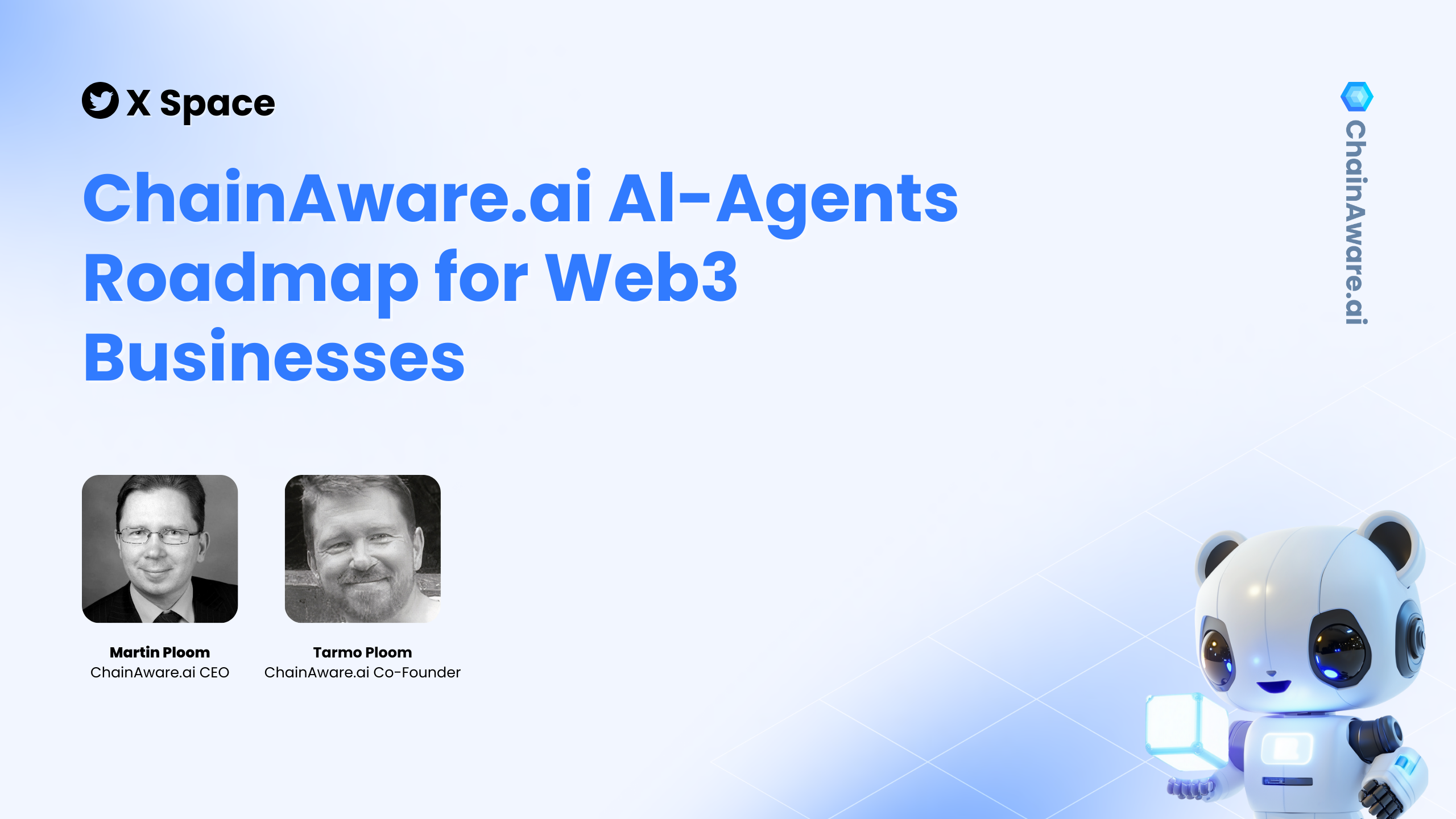
AI Agents for Web3: The ChainAware Roadmap

X Space #31 recap: how predictive AI builds trust, accelerates growth, and improves user experience in Web3. ChainAware co-founders Martin and Tarmo cover Fraud Detector, AML Scorer, Growth Agents, Prediction MCP, and the onboarding-router – practical AI already running across 8 blockchains and 20M+ wallet profiles.

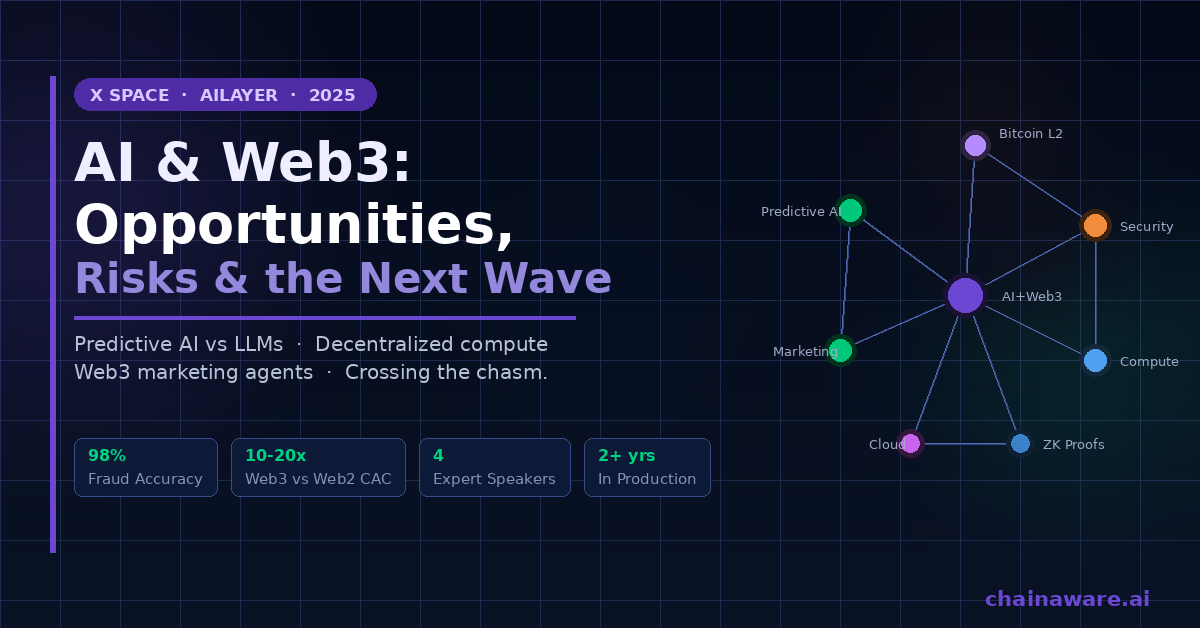
AI and Web3 – Opportunities, Risks and the Next Wave – X Space with AILayer

ChainAware co-founder Martin joins Cluster Protocol, SecuredApp, and Foreverland on an AILayer X Space to discuss the intersection of AI and Web3 – the opportunities, the risks, and the next wave. Covers AI agent coordination, DeFi security, smart contract audits, Web3 cloud infrastructure, and where behavioral intelligence fits in the stack.

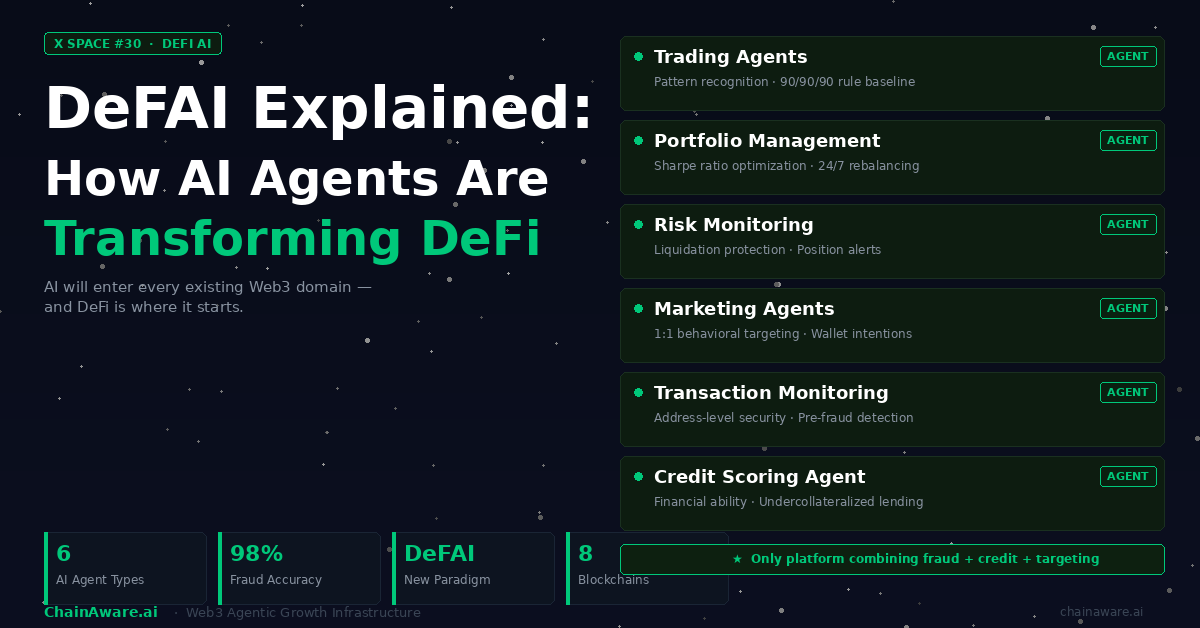
DeFAI Explained: How AI Agents Are Transforming Decentralized Finance

DeFAI = existing DeFi utility + AI-driven execution. Based on X Space #30 with ChainAware co-founders Martin and Tarmo, this guide explains how AI agents are entering every DeFi domain – compliance, growth, credit, and fraud detection – and why the protocols that integrate predictive AI now will define the next cycle.

Predictive AI for Web3: Growth and Security Without LLM Wrappers

95% of Web3 AI projects are LLM wrappers – unable to predict behavior, detect fraud, or power marketing agents. This guide, based on ChainAware co-founder Martin’s conversation with Plena Finance, explains what real predictive AI requires, why proprietary neural networks trained on labeled behavioral data are the only viable path, and where LLMs actually fit.