Payment networks agent trust stack fails — ChainAware.ai fraud detection for AI agents

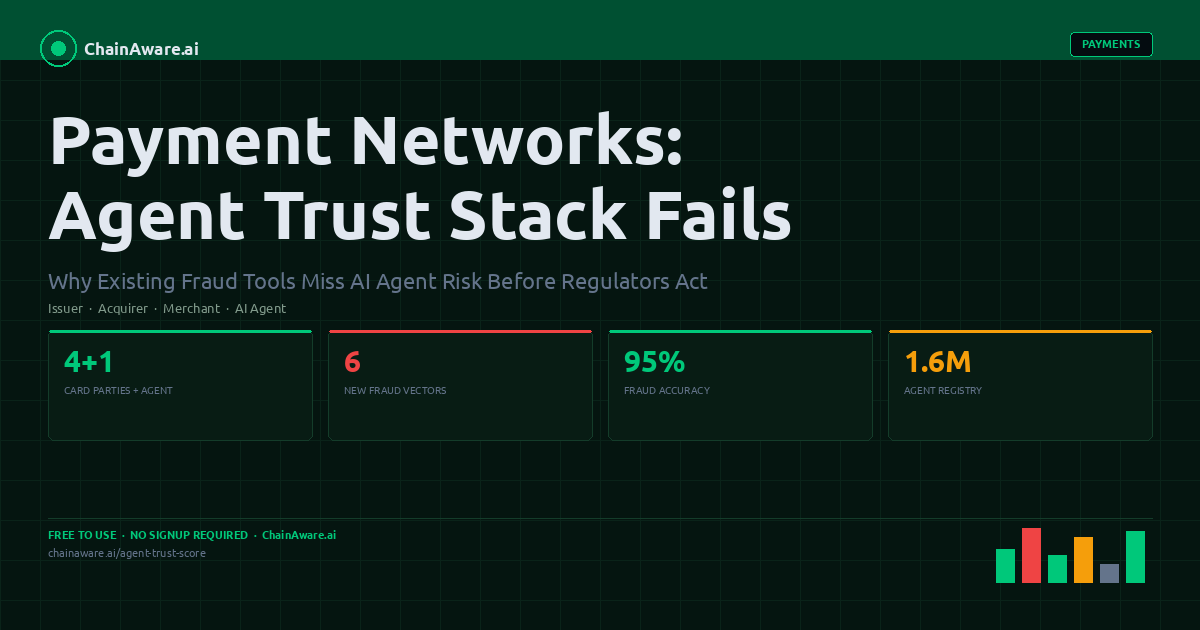
Payment Networks Exposed: The Full Truth About Why the Agent Trust Stack Fails

Payment networks built their fraud defences on a single assumption: humans are on the other side of every transaction. But Gartner estimates that 15 percent of enterprise transactions will be agent-initiated by 2027, and AI agents are already transacting today—booking travel, purchasing API credits, settling invoices and triggering recurring orders. The problem is urgent: velocity rules flag legitimate high-frequency agent activity as fraud, device fingerprinting loses all signal on shared cloud infrastructure, and behavioral biometrics has nothing to measure when software is the buyer. ChainAware’s research reveals how payment networks can retrofit their fraud stacks before agentic volume scales to levels that make retrofitting prohibitively expensive. Discover the three critical failure modes breaking today’s detection frameworks and what a practical fix looks like for acquirers and infrastructure architects.
KYA regulations EU AI Act MiCA agentic economy compliance timeline — ChainAware.ai

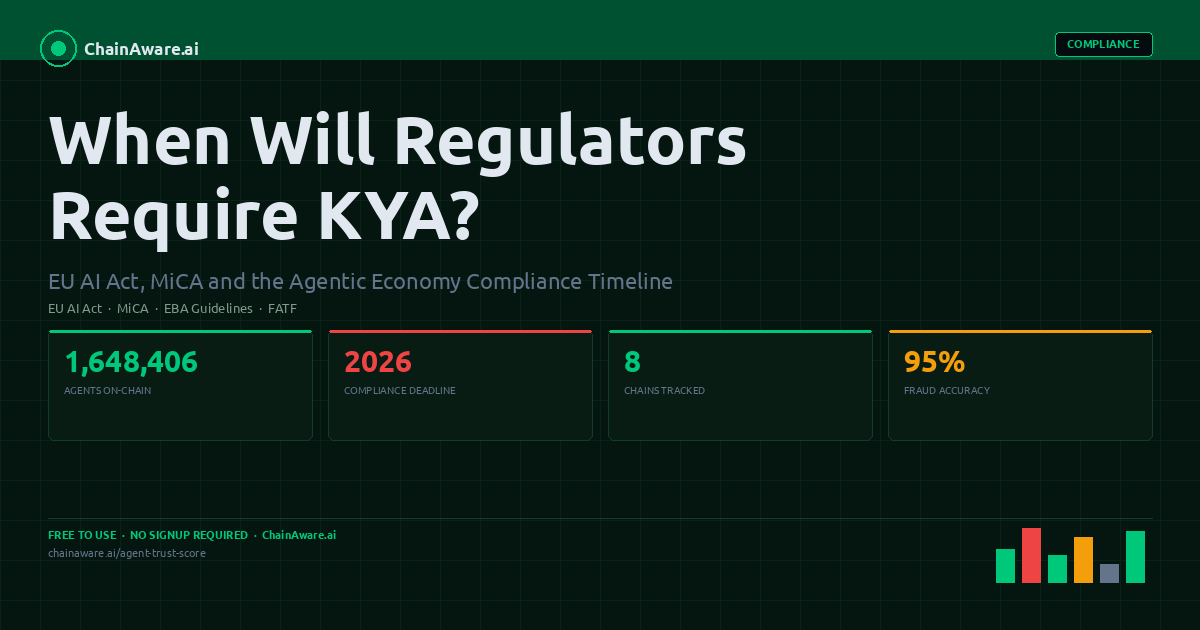
KYA Regulations Exposed: Proven Truth About the EU AI Act, MiCA and Agentic Economy

Regulators haven’t yet mandated Know Your Agent protocols — but three separate regulatory frameworks are converging to make it inevitable. The EU’s MiCA Article 68 is creating screening gaps for AI agent wallets, whilst the EU AI Act Article 50 establishes identity disclosure as a legal requirement. Meanwhile, the FATF Travel Rule is closing in on the agent originator problem. With 1.6 million ERC-8004 agents already indexed on-chain and funding chains traceable to known bad actors, compliance teams face enforcement exposure today, long before formal agent-specific rules land. This article maps the three regulatory tracks, identifies the grey areas where agents currently operate, and provides a realistic timeline for when mandatory agent registration becomes law. Learn what your team needs to do now to stay ahead of the curve — and why ChainAware’s agent behaviour scoring is becoming essential compliance infrastructure.

KYC to KYA identity verification evolution for AI agents — ChainAware.ai agent trust score

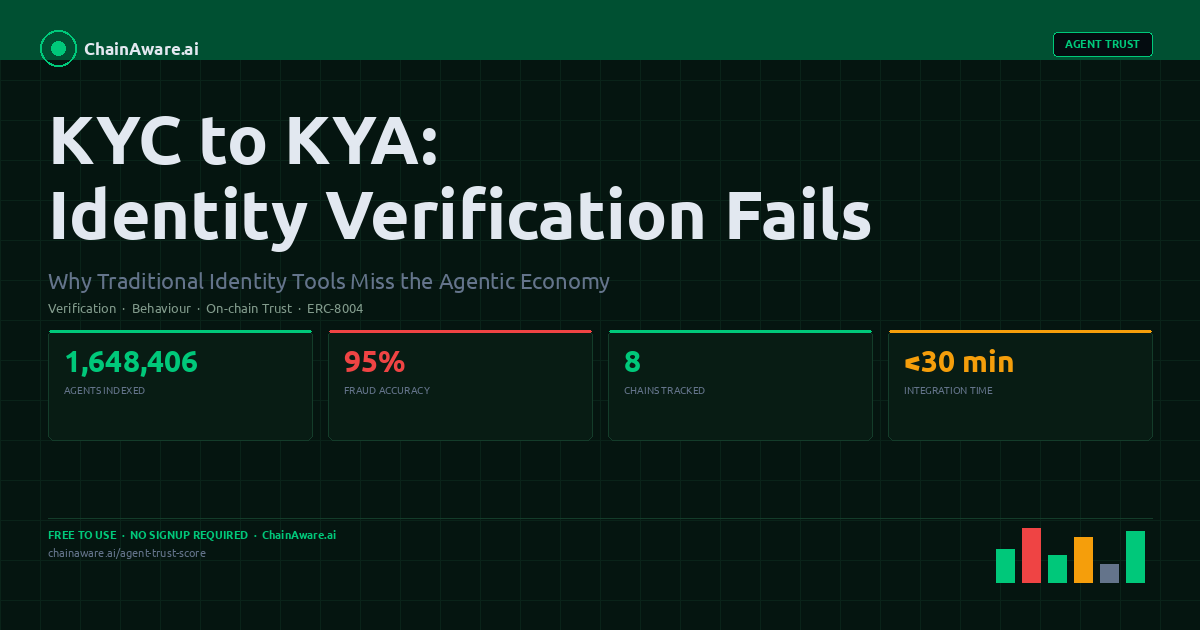
KYC to KYA Exposed: Proven Truth About Identity Verification in the Agentic Economy

Traditional Know Your Customer protocols were built for humans—but AI agents operating autonomously across blockchains expose three critical gaps that KYC cannot close alone. When software holds wallets and executes transactions without human oversight for each action, the delegation chains, behavioral drift and fleet Sybil attacks multiply compliance blind spots. ChainAware’s analysis of the ERC-8004 agent ecosystem reveals the scale: 1.6 million registered agents across eight chains, with 82.5% of scored agents showing elevation risk signals that static identity checks never catch. This article explains precisely where KYC breaks under agent volume, what Know Your Agent adds to close those gaps and what on-chain behavioral intelligence reveals about the agentic economy’s real compliance challenge. Discover why continuous behavioral scoring, not point-in-time verification, is now essential for Web3 compliance teams.

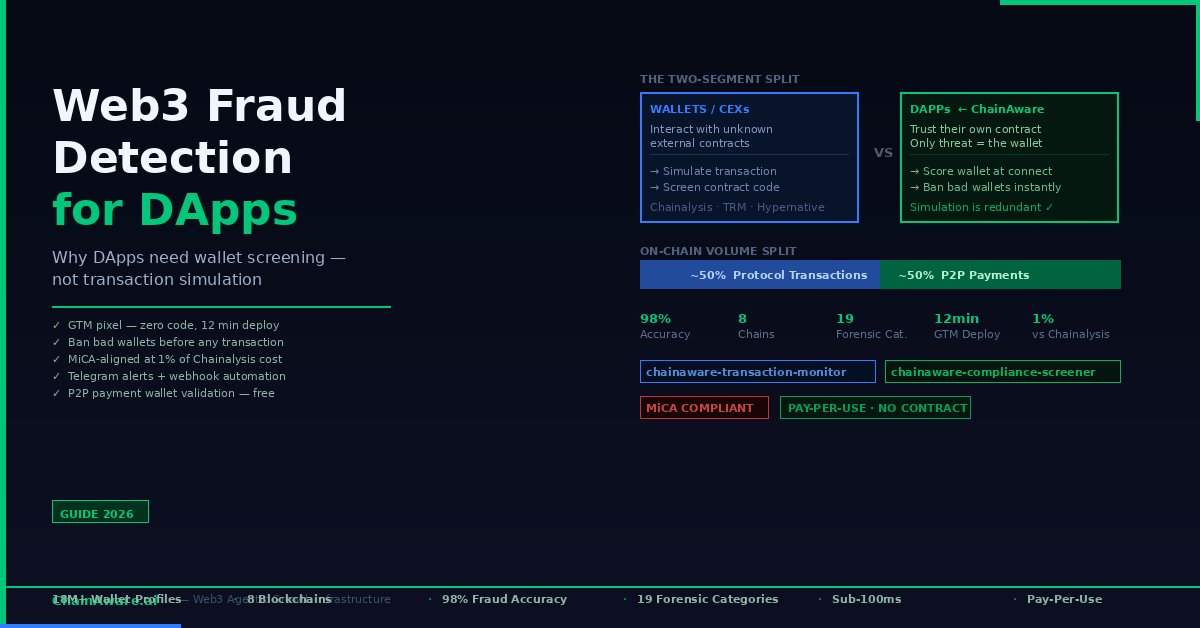
Wallet screening vs transaction simulation for DApp fraud detection in 2026, illustrated with blockchain security graphics —

Web3 Fraud Detection Exposed: The Full Truth About Wallet Screening for DApps

Web3 lost $4 billion to fraud in 2025. Most fraud detection tools were built for wallet providers and CEXs – not DApps. ChainAware is the only platform purpose-built for DApps: behavioral wallet screening at connection, zero-code GTM deploy, 98% fraud accuracy, MiCA-aligned at 1% of Chainalysis cost.

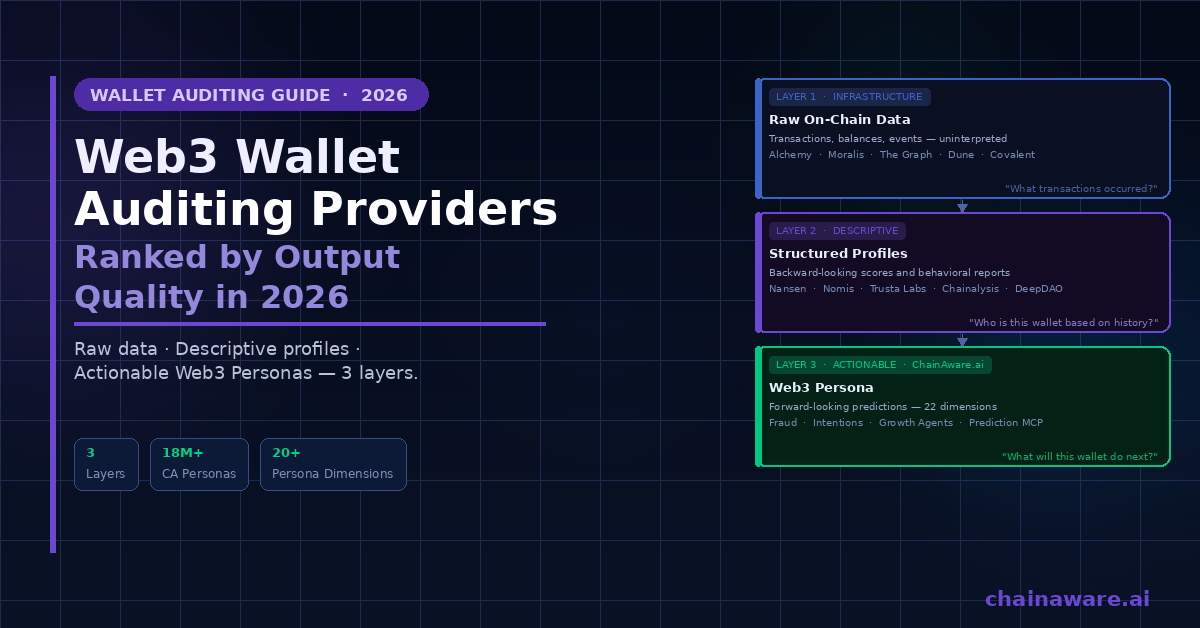
Web3 wallet auditing dashboard turning raw blockchain data into wallet persona profiles — Web3 wallet auditing providers 2026

Web3 Wallet Auditing Exposed: The Full Truth About 2026 Providers

Every wallet address that connects to your DApp carries a complete behavioral history. In 2026, three distinct layers of wallet auditing infrastructure have emerged – raw data, descriptive profiles, and actionable predictions – and confusing them leads to selecting the wrong tools for the job.

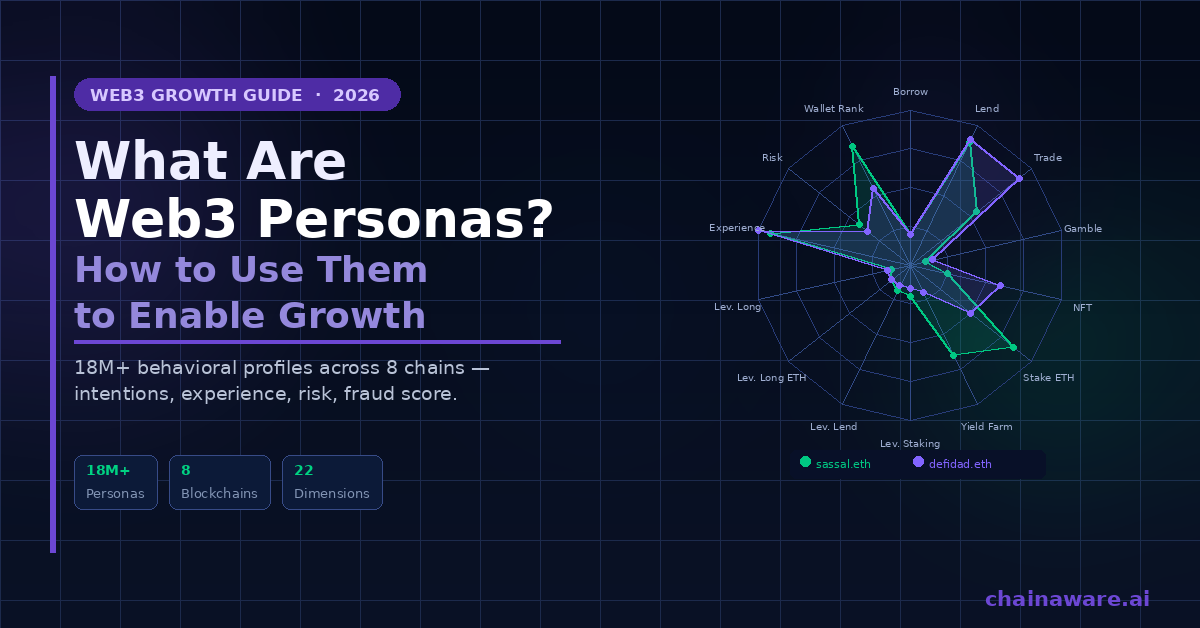
Abstract illustration of Web3 persona profiles linked to wallet nodes for growth — Web3 personas guide — ChainAware.ai

What Are Web3 Personas? How to Use Them to Enable Your Growth – Complete Guide 2026

A Web3 Persona is a calculated behavioral profile of who is behind any wallet address – their intentions, experience level, risk appetite, and predicted next actions. This guide explains what they are, how ChainAware builds 18M+ of them across 8 blockchains, and how DApps use them to enable real growth.

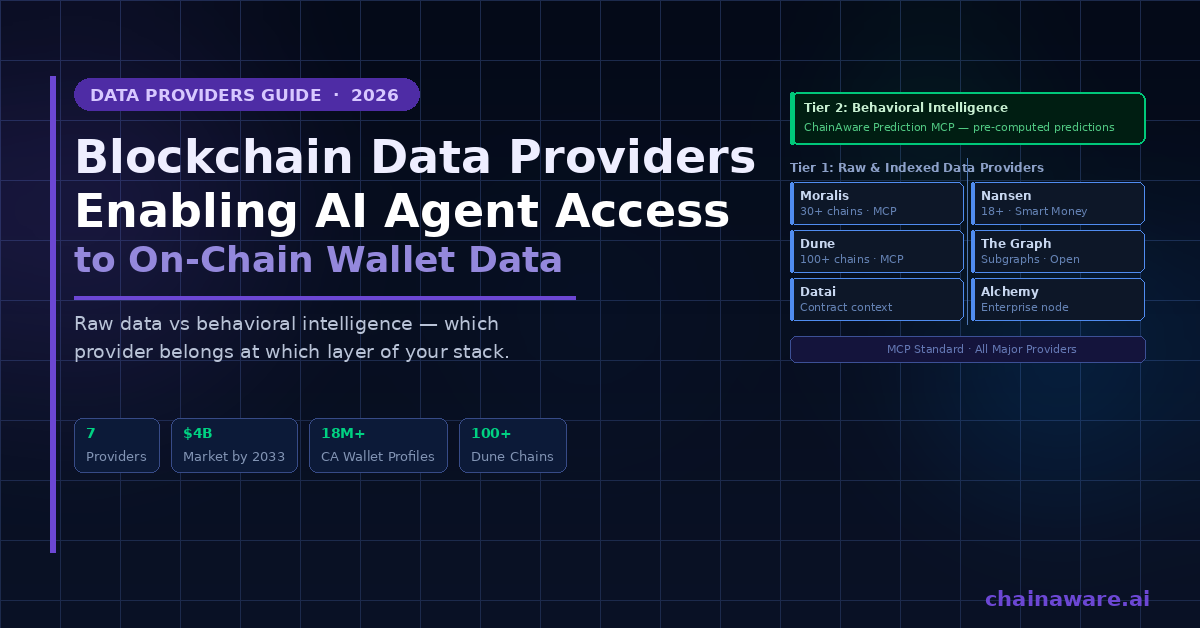
Diagram of AI agents querying on-chain wallet data via blockchain data providers — Complete Guide 2026 — ChainAware.ai

Blockchain Data Providers Fail AI Agents? The Complete Security Truth for 2026

AI agents need on-chain wallet data to make intelligent decisions – but most blockchain data providers were built for human analysts, not autonomous systems. This guide maps every major provider enabling AI agent access to wallet data in 2026, from raw indexers to pre-computed behavioral intelligence layers.

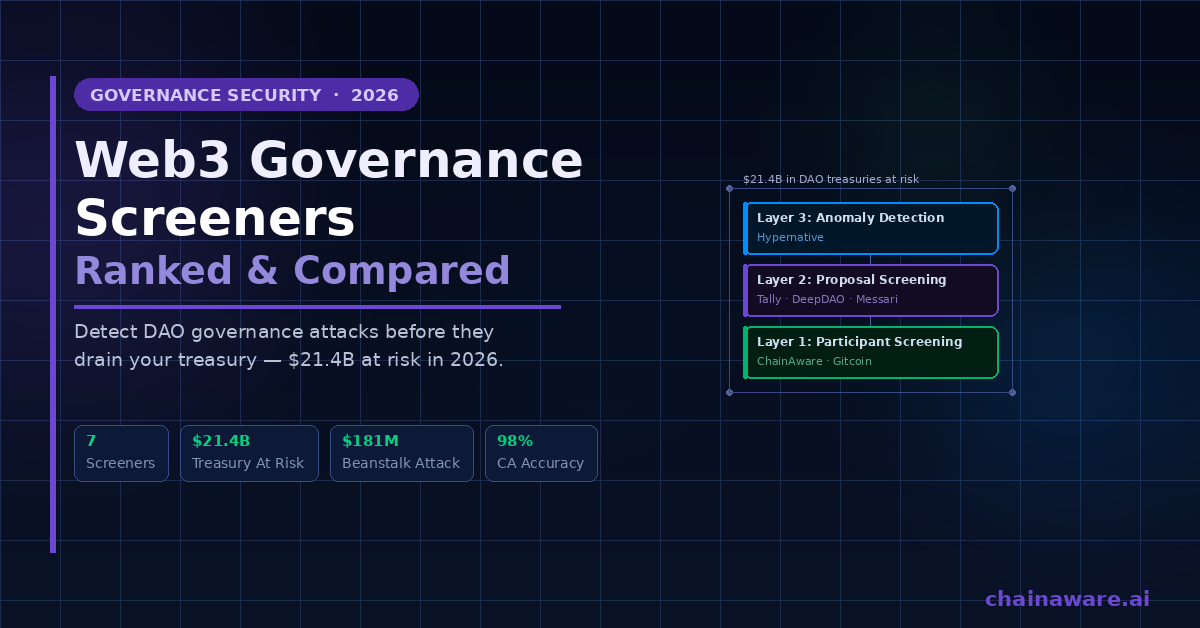
Web3 governance screener dashboard flagging DAO attack risks — best governance screeners 2026 — ChainAware.ai

Web3 Governance Screeners Exposed: The Full Truth About DAO Attack Detection

$21.4 billion in liquid DAO treasury assets sits exposed to governance attacks. One malicious proposal can drain a treasury in a single block – as Beanstalk proved with $181M lost in 2022. This guide covers every major Web3 governance screener in 2026 and how to detect attacks before they execute.

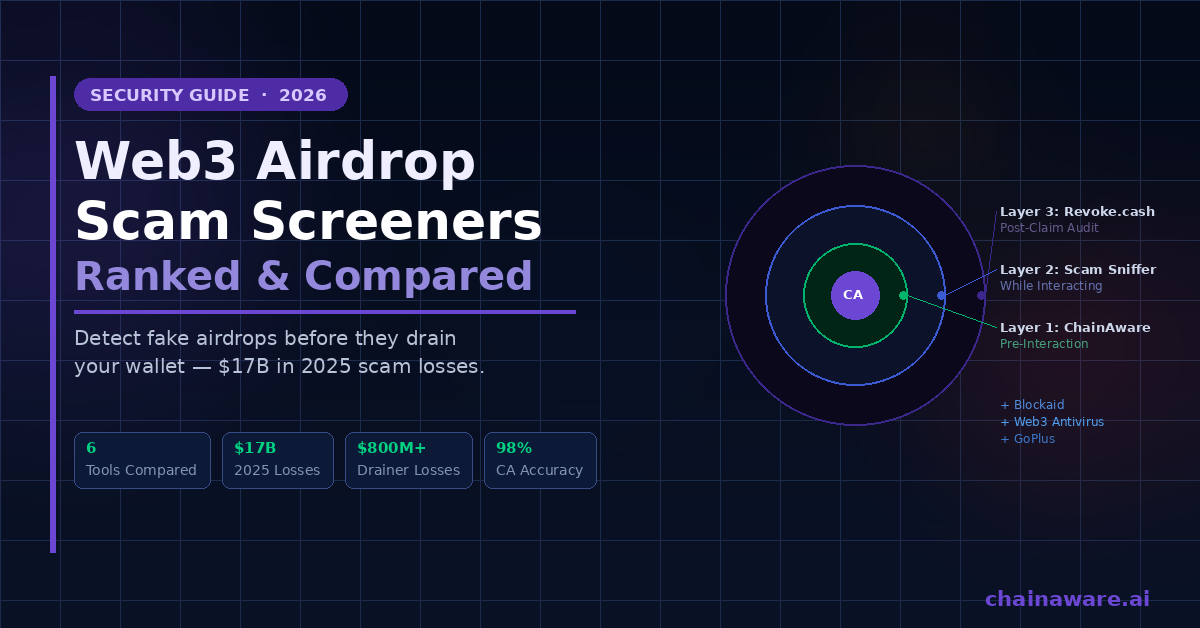
Shield icon over a crypto wallet blocking fake airdrop phishing links — Web3 airdrop scam screeners 2026 — ChainAware.ai

Best Web3 Airdrop Scam Screeners in 2026 – How to Detect Fake Airdrops Before They Drain Your Wallet

Crypto scam losses hit $17 billion in 2025, with fake airdrops among the fastest-growing attack vectors – impersonation scams grew 1,400% year-over-year. This guide covers every major airdrop scam screener in 2026 and how to detect fake airdrops before they drain your wallet.

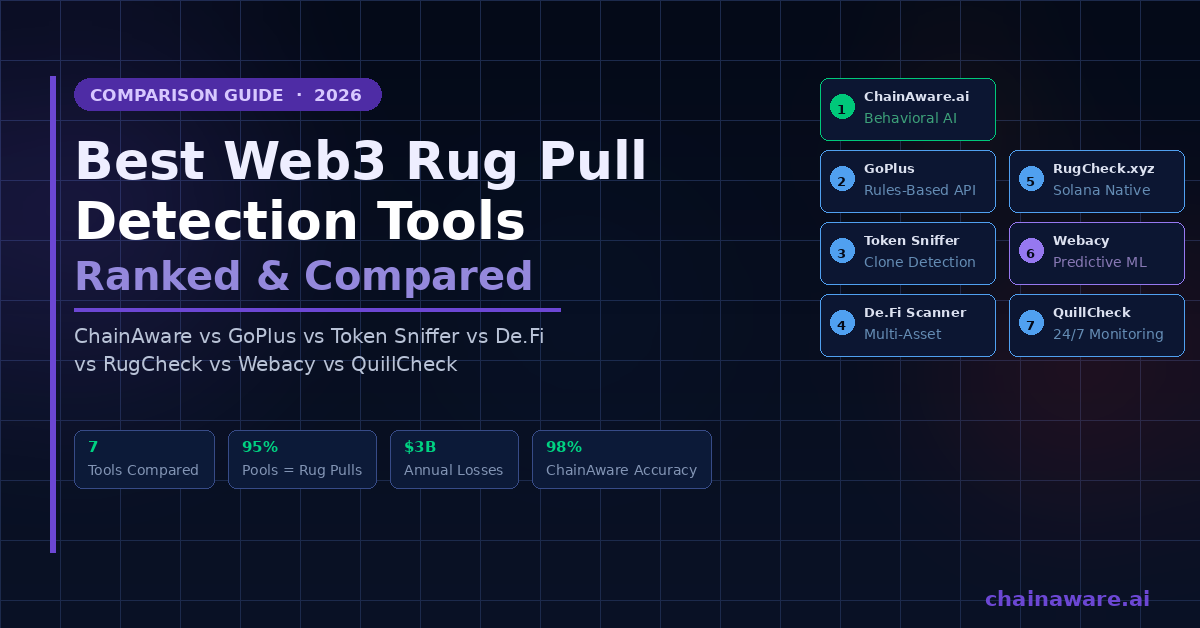
Ranked comparison chart of Web3 rug pull detection tools for 2026 — ChainAware.ai

Web3 Rug Pull Detection Tools Exposed: The Full Truth for 2026

Tested 12 rug pull detection tools in 2026. ChainAware’s AI catches rugs pre-launch with 95% accuracy — here’s how GoPlus, RugCheck, Token Sniffer, and 9 others compare.