Web3 Wallet Auditing Providers in 2026 — From Raw Blockchain Data to Actionable Web3 Personas
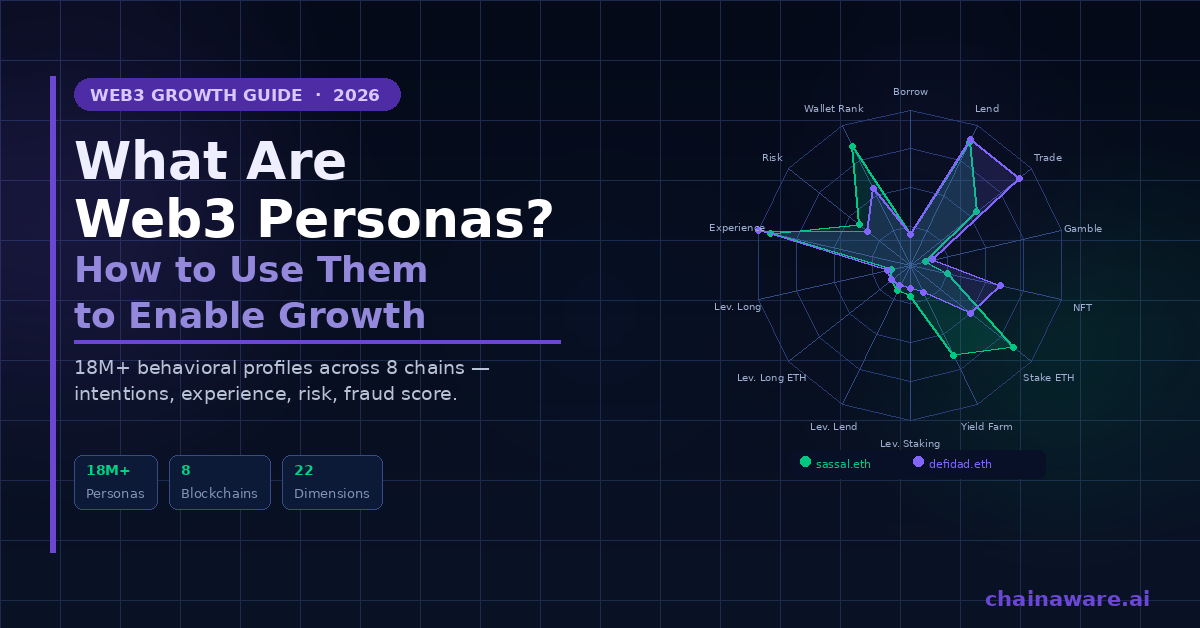
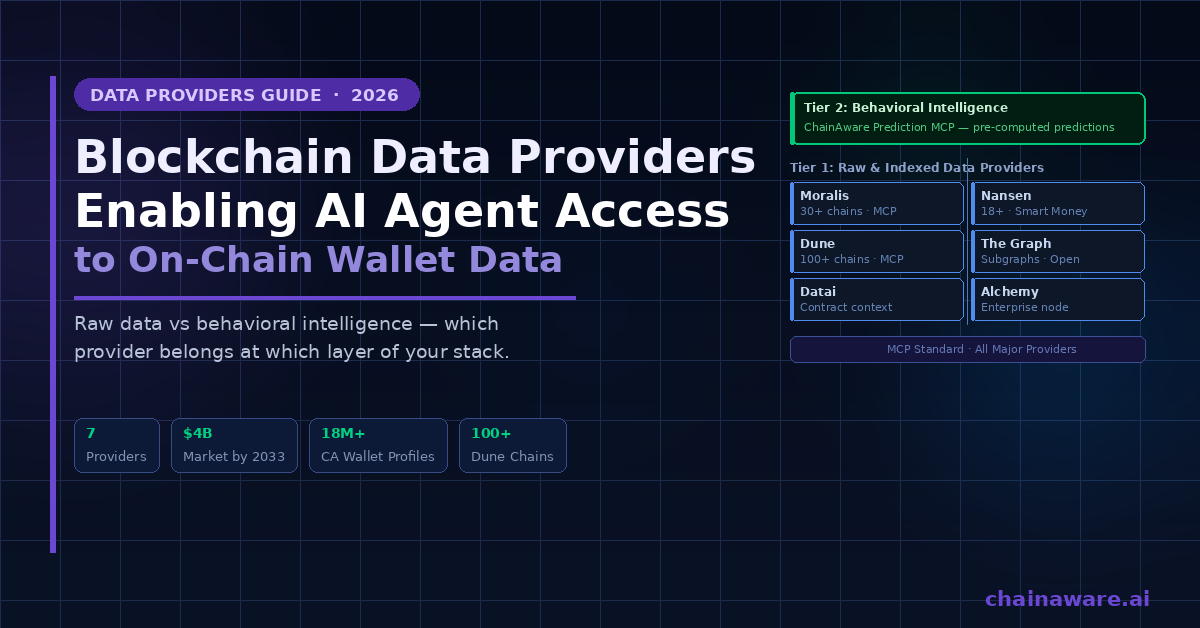
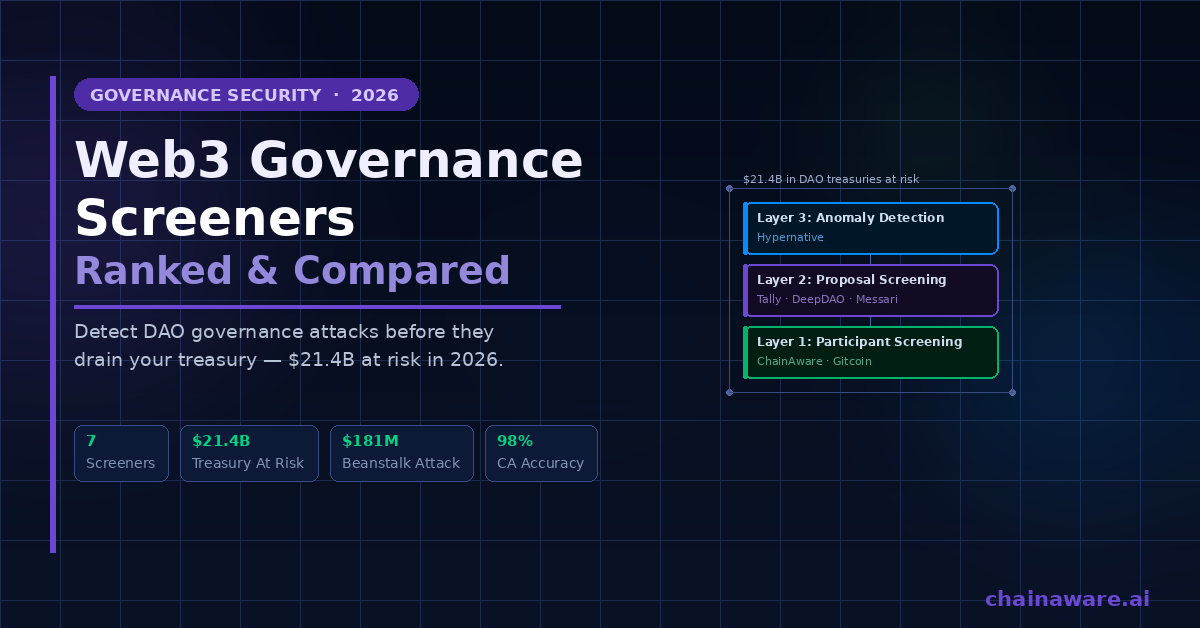
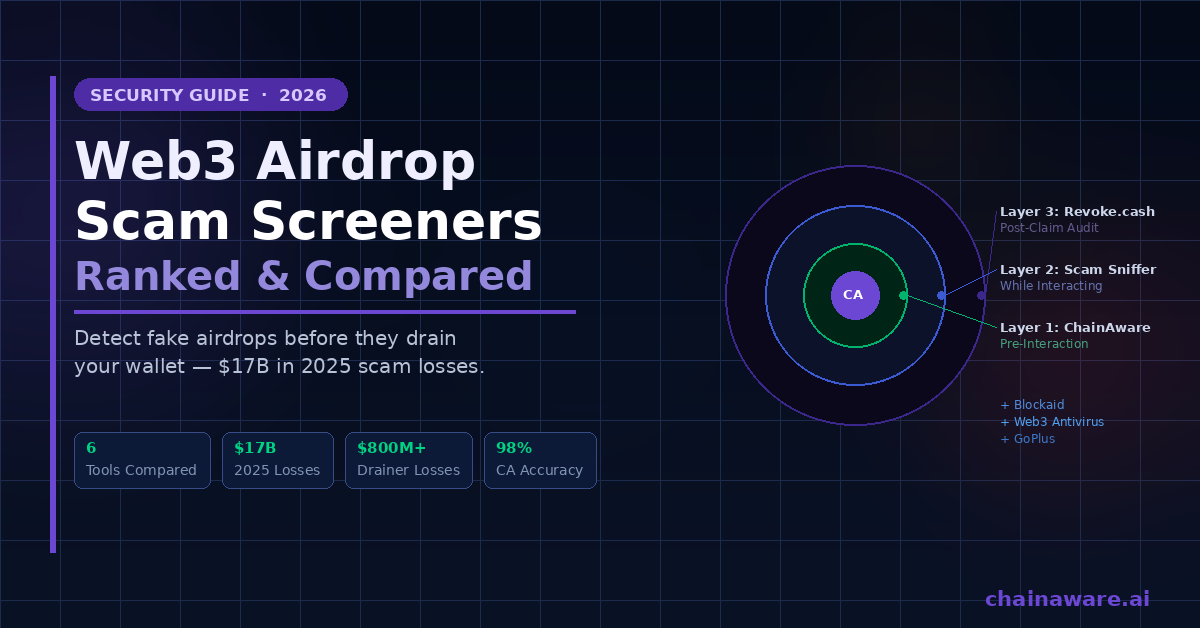
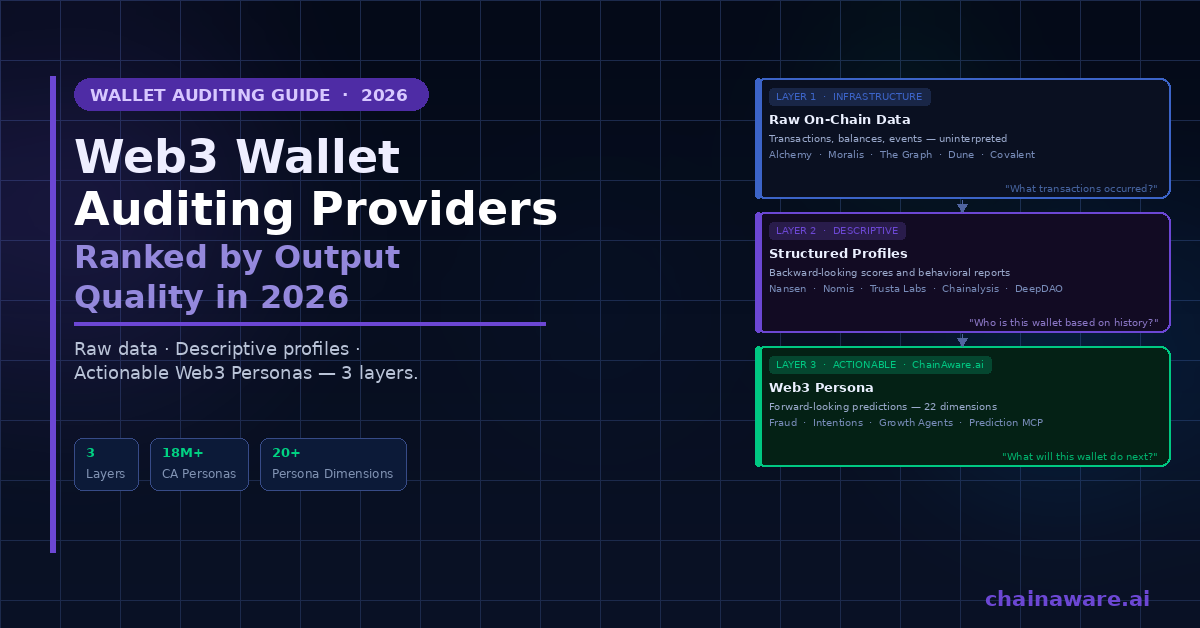
Web3 Wallet Auditing Providers in 2026 — From Raw Blockchain Data to Actionable Web3 Personas. Three-layer framework: Layer 1 (blockchain infrastructure — raw data), Layer 2 (descriptive aggregation — structured profiles), Layer 3 (actionable intelligence — Web3 Persona predictions). Layer 1 answers “What transactions occurred?” Layer 2 answers “Who is this wallet based on history?” Layer 3 answers “What will this wallet do next — and what should I do about it?” Layer 1 providers: Alchemy (enterprise node infrastructure, 18+ chains, Series C), Moralis (30+ chains, ElizaOS plugin, MCP server), The Graph (decentralized subgraphs, GraphQL), Dune Analytics (MCP server 2025, 100+ chain datasets), Covalent (unified Block Specimen API). Layer 2 reputation/Sybil: Nomis (50+ chains, 30+ parameters, airdrop gating, NFT score attestation), Trusta Labs / TrustScan (GNN/RNN Sybil detection, MEDIA score 5 dimensions, 570M wallets analyzed, 200K MAU — the “3M users” claim refers to wallets processed through partner airdrop campaigns, not active users; ex-Alipay AI founders), Spectral Finance (MACRO Score DeFi credit), RubyScore (activity quality). Layer 2 intelligence: Nansen (Smart Money labeling, entity attribution, Smart Alerts, 18+ chains), DeepDAO (11M governance participant profiles, 2,500+ DAOs). Layer 2 forensic: Chainalysis ($17B scam losses tracked 2025, $100K–$500K/year enterprise, law enforcement forensics), TRM Labs, Elliptic, Nominis (VASP AML alternative, terror financing database). The fundamental L2 limitation: backward-looking by design — describes past, not future; creates report-to-action gap requiring human analyst or custom ML pipeline. Layer 3: ChainAware.ai — only full-stack Layer 3 provider. Web3 Persona: 22 dimensions, 12 intention probabilities (Borrow/Lend/Trade/Gamble/NFT/Stake ETH/Yield Farm/Leveraged Staking/Leveraged Staking ETH/Leveraged Lending/Leveraged Long ETH/Leveraged Long Game), experience, risk, fraud probability 98% accuracy, AML/OFAC. 18M+ profiles. 8 chains. Growth Agents deploy persona at wallet connection like Google AdWords. Prediction MCP for AI agents. Token Rank for holder quality. Free Wallet Auditor. $3.35B across 630 security incidents 2025 (CertiK). chainaware.ai