Why Crypto Trust Score Metrics Are Important

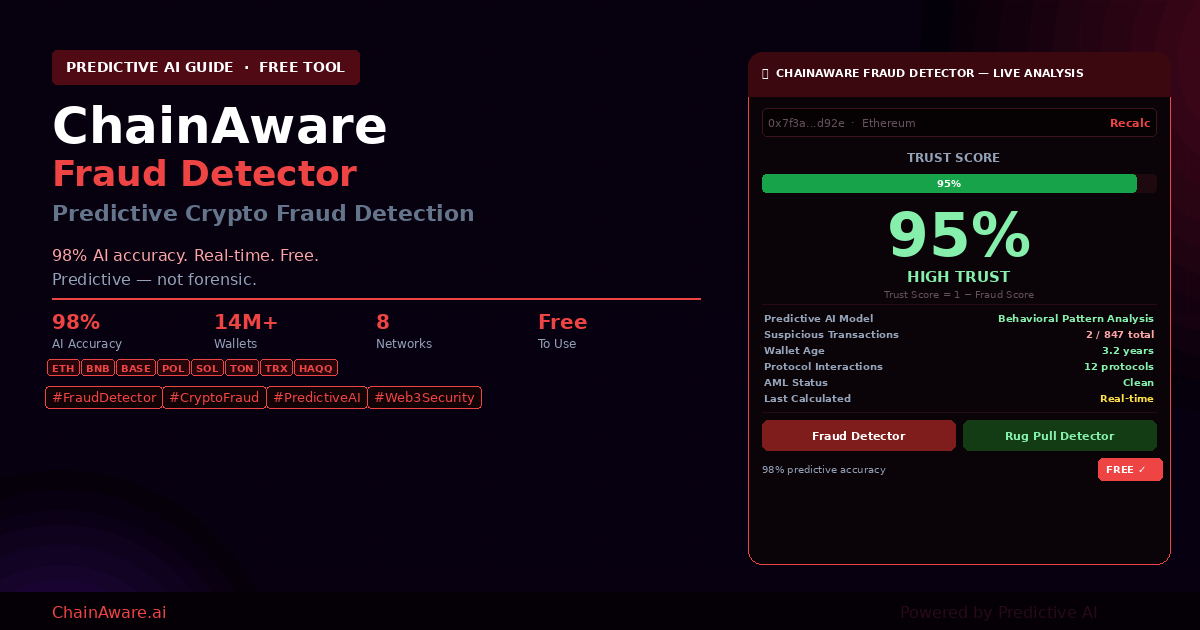
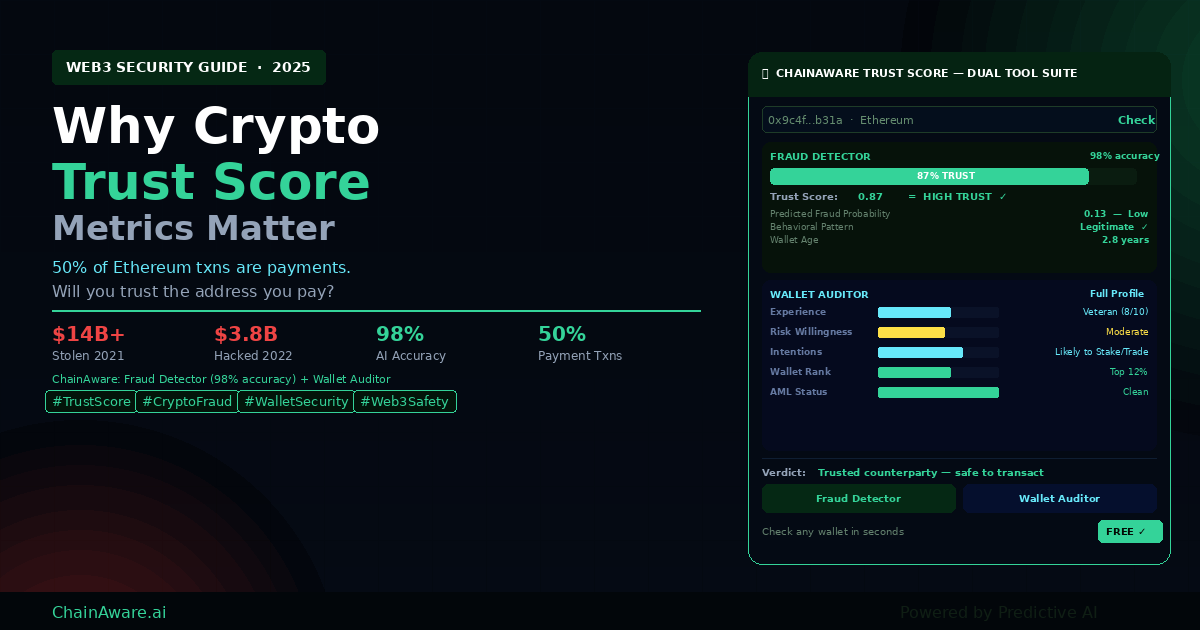
50% of Ethereum transactions are payments — yet the payment layer has almost no security infrastructure. This guide explains why crypto trust score metrics matter for real-time counterparty verification, how predictive fraud scoring differs from reactive blocklists, and why checking any wallet before transacting is the most important security habit in Web3.

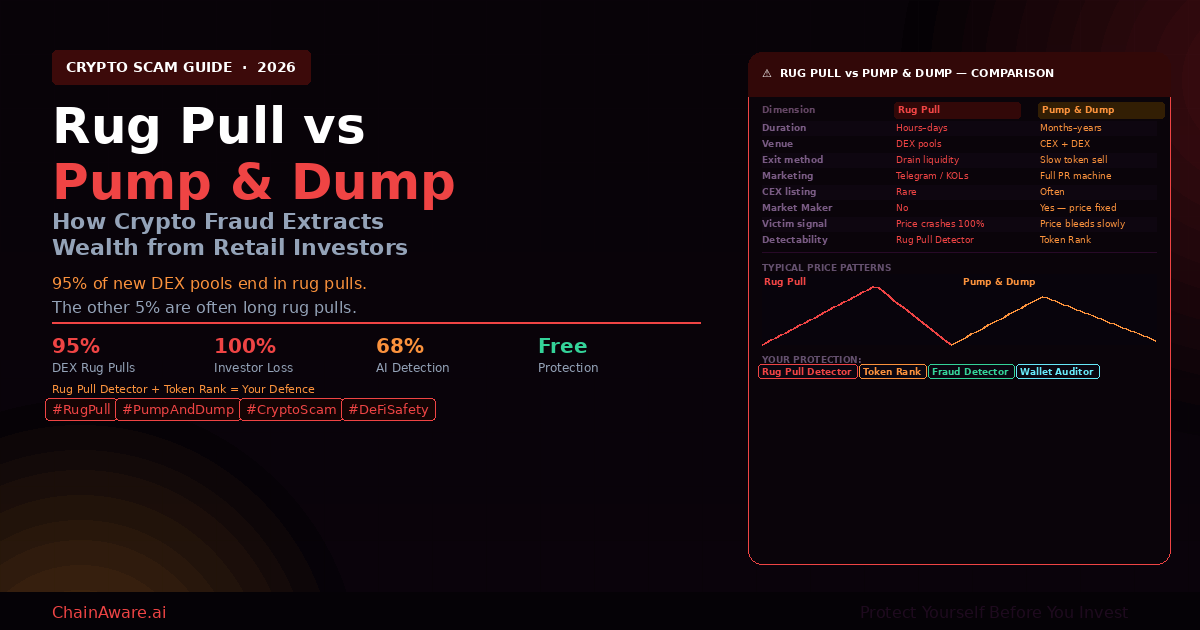
Rug Pull vs Pump and Dump: How Crypto Fraud Extracts Wealth from Retail Investors (2026 Guide)

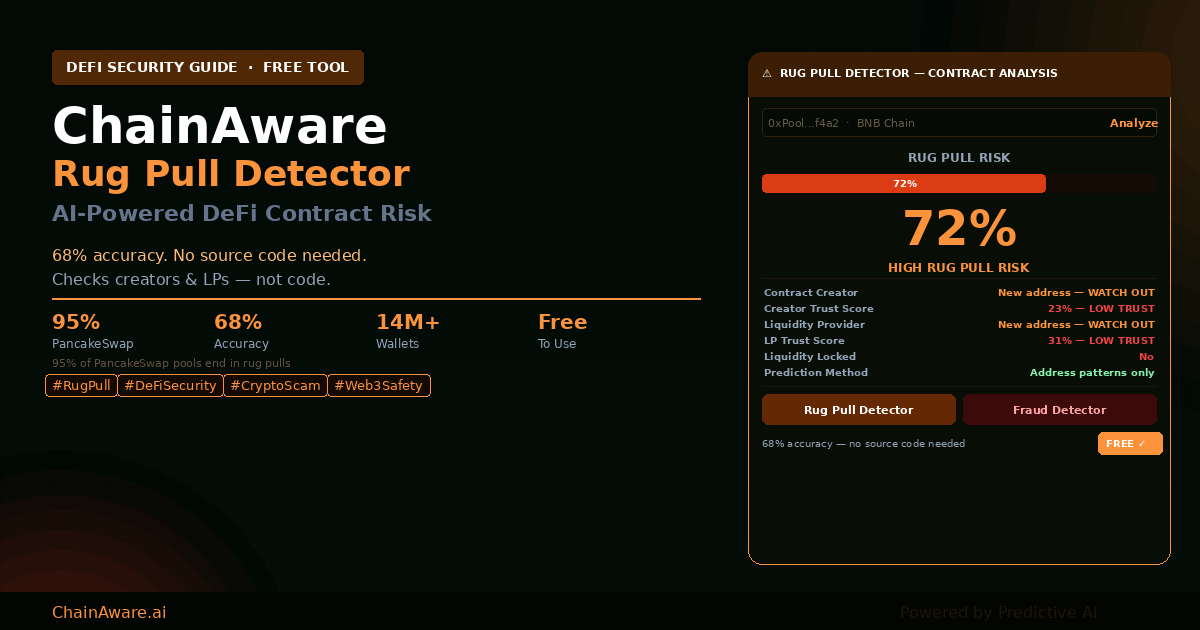
Rug pulls drain liquidity overnight — token worthless by morning. Pump and dump schemes extract value slowly over weeks through insider sell-offs. Both are engineered to maximize retail losses. This 2026 guide explains how each works, how to tell them apart, and which ChainAware tools detect each type before you invest.

Crypto AML versus Crypto Transaction Monitoring: What’s the Difference and Why You Need Both

AML checks where funds came from. Transaction monitoring predicts what a wallet will do next. Most DeFi protocols run one but not the other — leaving a critical gap that sophisticated fraudsters exploit with clean funds. This guide explains the difference, the regulatory basis for both, and why you need them together.

How to Identify Fake Crypto Tokens in 2026: Rug Pulls, Long Rug Pulls, and DYOR

95% of PancakeSwap pools end as rug pulls. 99% of Pump.fun tokens extract money from buyers. This 2026 guide explains how to identify fake crypto tokens before investing — covering instant rug pulls, slow pump-and-dump schemes, the red flags to check manually, and which AI tools automate the detection for you.