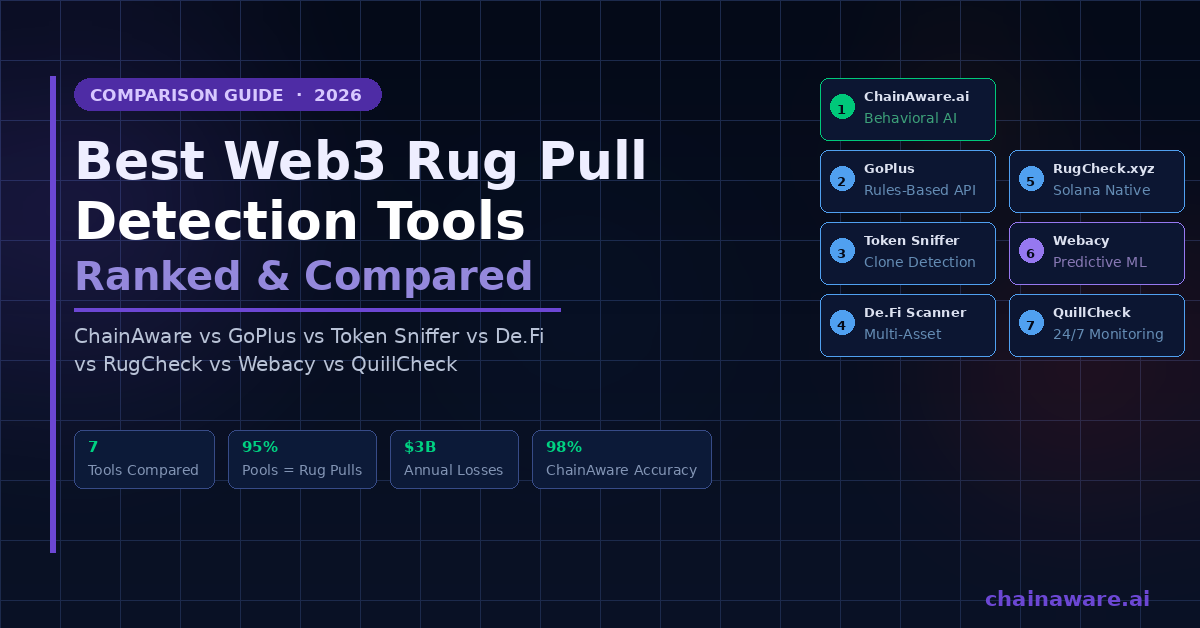
Web3 Rug Pull Detection Tools Exposed: The Full Truth for 2026
Tested 12 rug pull detection tools in 2026. ChainAware’s AI catches rugs pre-launch with 95% accuracy — here’s how GoPlus, RugCheck, Token Sniffer, and 9 others compare.

Tested 12 rug pull detection tools in 2026. ChainAware’s AI catches rugs pre-launch with 95% accuracy — here’s how GoPlus, RugCheck, Token Sniffer, and 9 others compare.
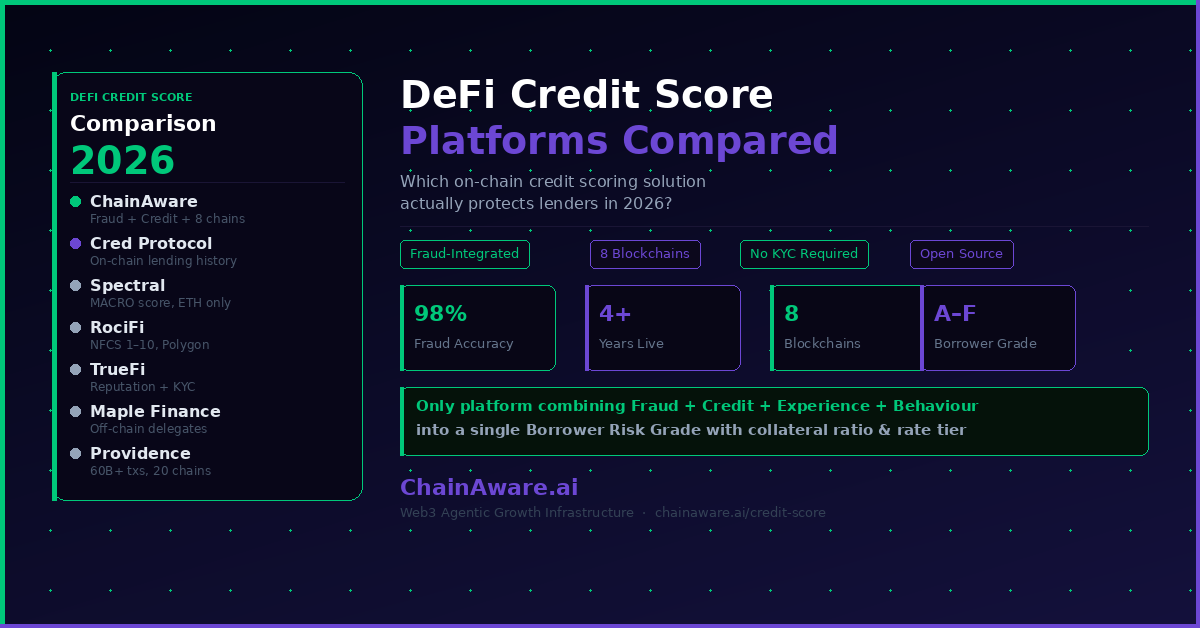
ChainAware vs Cred Protocol vs Spectral vs Masa — every DeFi credit score platform compared in 2026. 90%+ of DeFi loans are overcollateralized; on-chain credit scoring changes that.
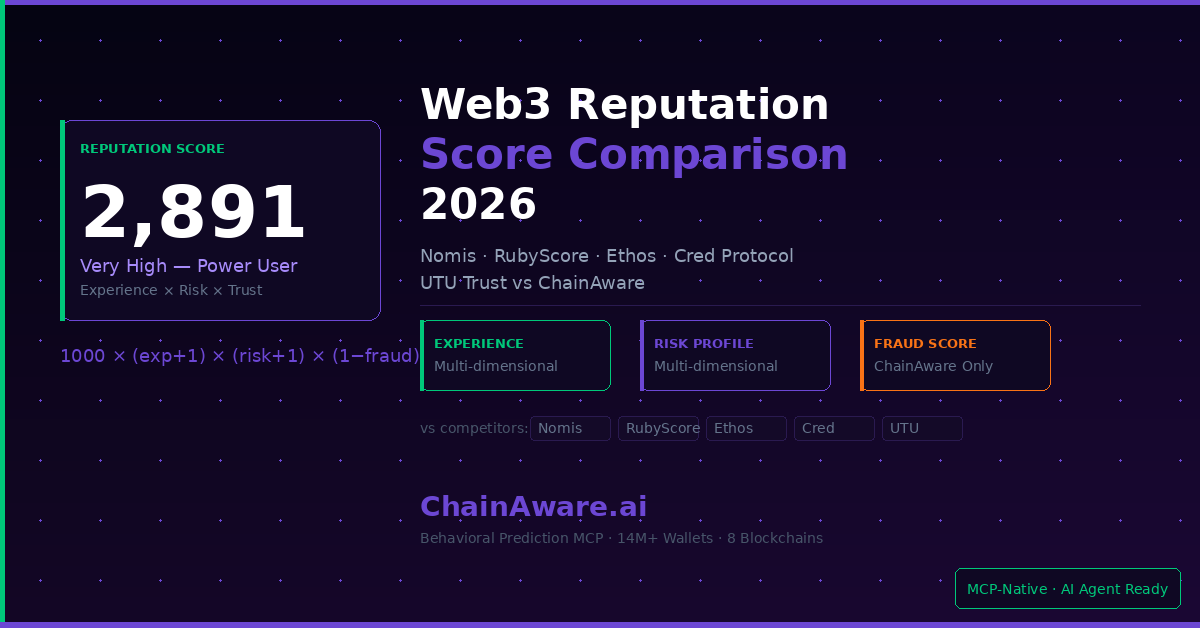
Web3 reputation scoring in 2026 compared across 7 platforms: Nomis, RubyScore, Ethos Network, Cred Protocol, UTU Trust, Whitebridge, and ChainAware. Most platforms measure activity. ChainAware is the only one that incorporates predictive fraud probability into the formula – producing an actionable 0-4000 score requiring no user action and callable by any smart contract or AI agent.
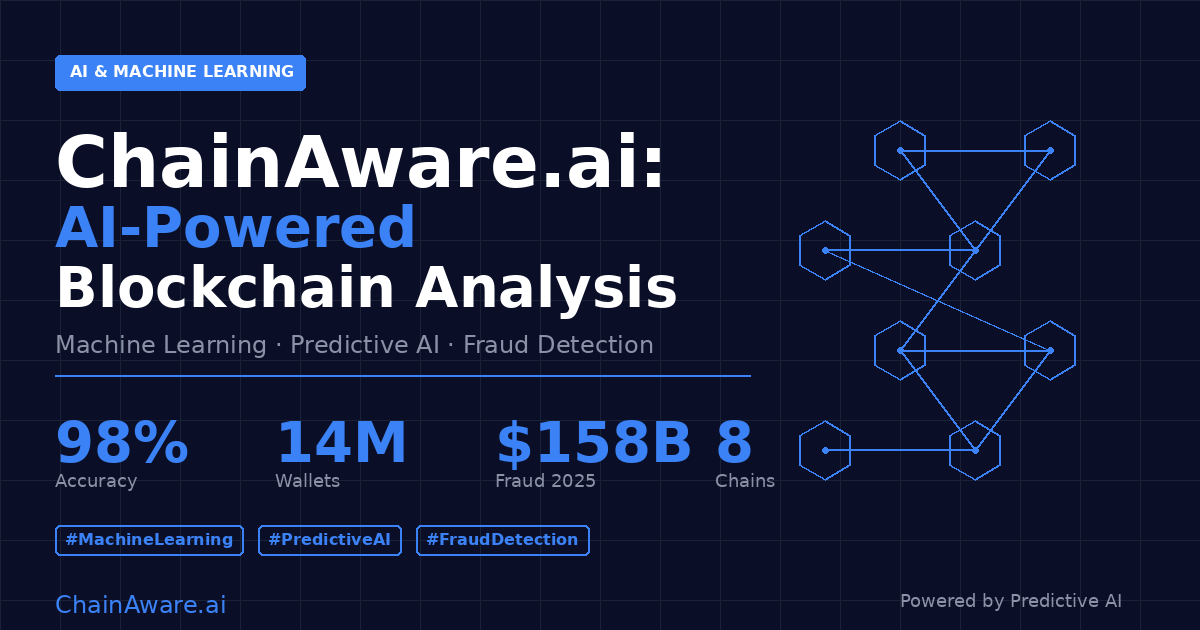
Crypto fraud hit $158B in illicit volume in 2025. Rule-based detection systems produce 30-70% false positive rates and are bypassed by fraudsters within days. This 2026 guide covers how machine learning replaces static rules for crypto security – and how ChainAware’s ML models achieve 98% fraud prediction accuracy across 20M+ wallets on 8 blockchains.
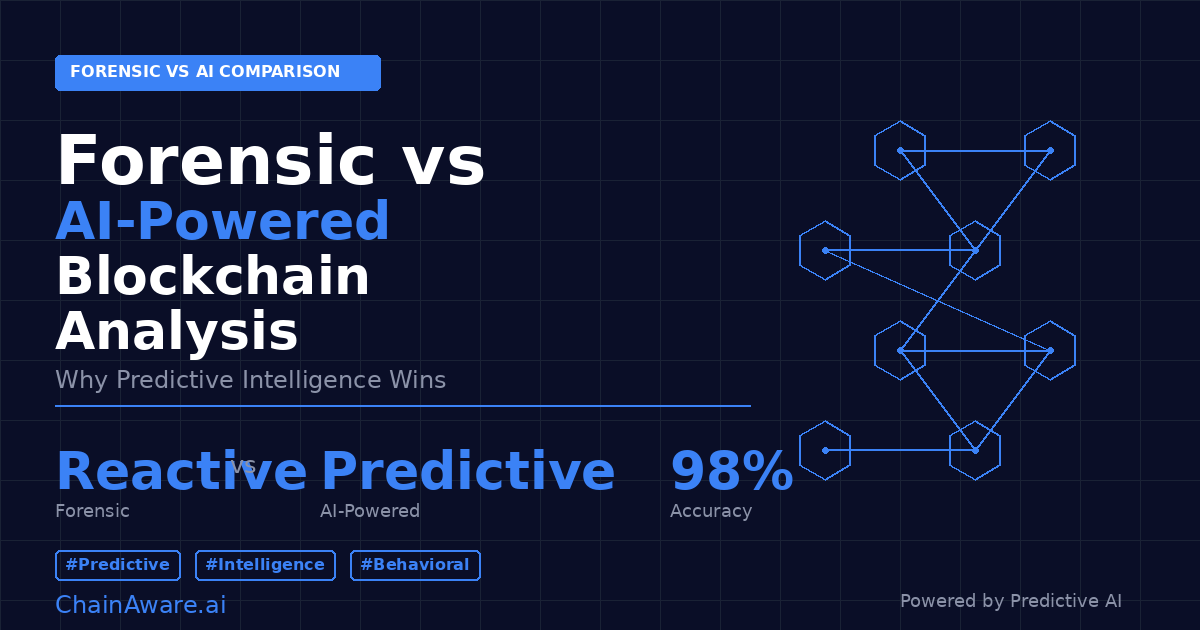
Forensic tools like Chainalysis, Elliptic, and TRM Labs trace funds after crimes occur – reactive, backward-looking, dependent on known bad actors. ChainAware predicts fraud before it happens – 98% accuracy across 20M+ wallets, 50+ behavioral features, continuously retrained daily. This guide explains why predictive intelligence wins over forensic analysis in 2026.
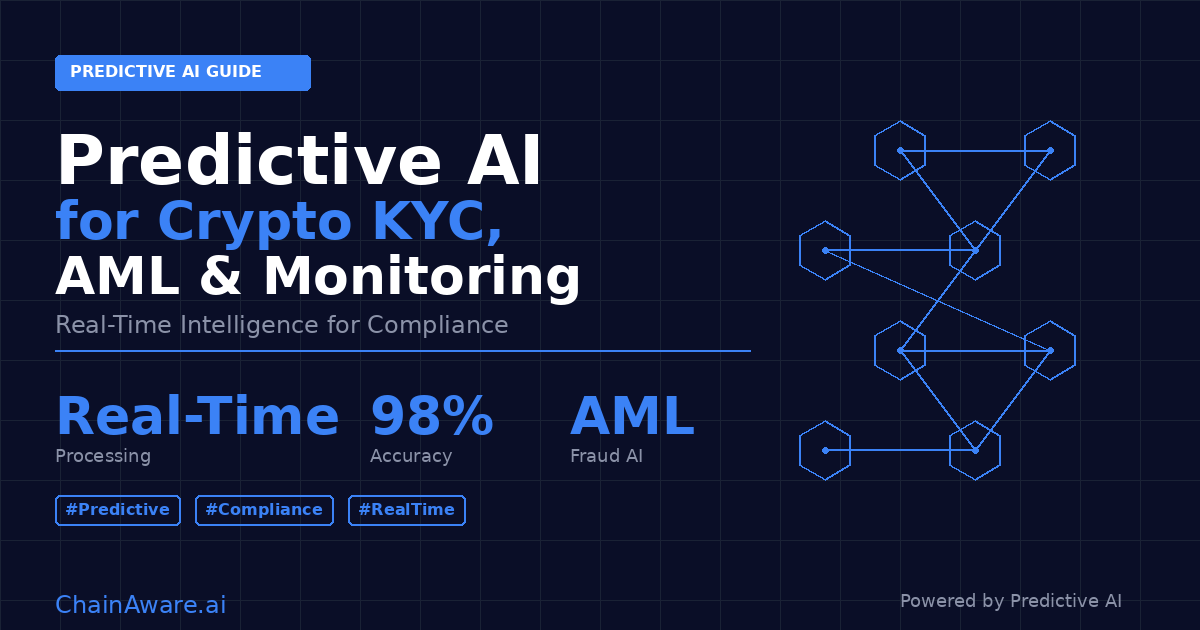
Generative AI creates content – it cannot process numerical transaction data or make real-time fraud classifications. Predictive AI is purpose-built for compliance: 98% accuracy, sub-100ms response, deterministic outputs. This 2026 guide explains the distinction and how to deploy predictive AI correctly for crypto KYC, AML, and transaction monitoring.
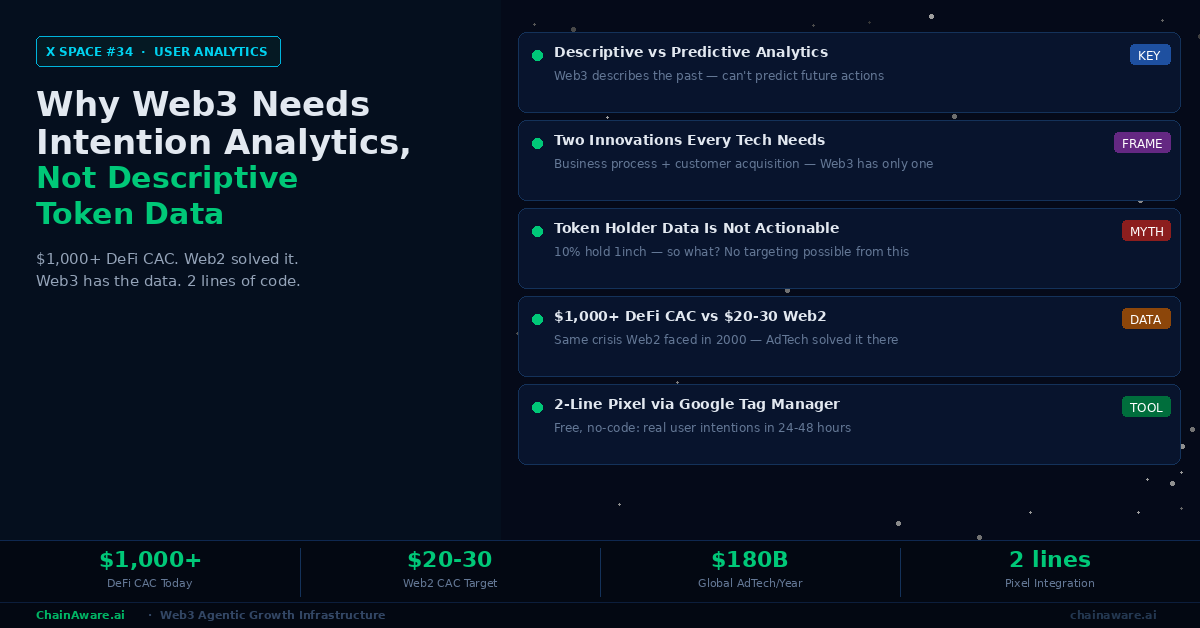
Descriptive token data tells you what happened. Intention analytics predicts what a wallet will do next. This guide – based on X Space #34 with ChainAware co-founders Martin and Tarmo – explains why the shift from descriptive to predictive analytics is the only path to reducing $1,000+ DeFi customer acquisition costs.
AML is rules-based and tracks the flow of bad funds. Transaction monitoring is AI-based and predicts future fraud from behavioral patterns. This guide – based on X Space #33 with ChainAware co-founders Martin and Tarmo – covers how to integrate both into any DApp, why you need both, and what 98% prediction accuracy actually means in practice.

Which AI can every DApp actually integrate via API continuously, with measurable accuracy? Based on X Space #32 with ChainAware co-founders Martin and Tarmo. The core framework: generative AI is a one-time tool used by humans; predictive AI runs continuously in the background – and it’s predictive AI that delivers real, measurable Web3 use cases.

X Space #31 recap: how predictive AI builds trust, accelerates growth, and improves user experience in Web3. ChainAware co-founders Martin and Tarmo cover Fraud Detector, AML Scorer, Growth Agents, Prediction MCP, and the onboarding-router – practical AI already running across 8 blockchains and 20M+ wallet profiles.